
After a CVS re-org left designers without a team structure, I had four weeks to build trust, define roles, and create a culture from scratch with people who had never worked together.
In January 2023, CVS's design org restructured from product-focused teams to journey-focused teams. Managers and team members were reassigned overnight. People found themselves on teams with colleagues they had never worked with, no defined processes, and only a month to ramp up on entirely new projects.
Jordan Williams and I heard about the re-org a couple of weeks before it happened — just enough time to plan. We drafted a six-week timeline covering everything we needed to do: introductions, workshops, agreements, knowledge transfer, and sprint planning. That head start made a real difference.
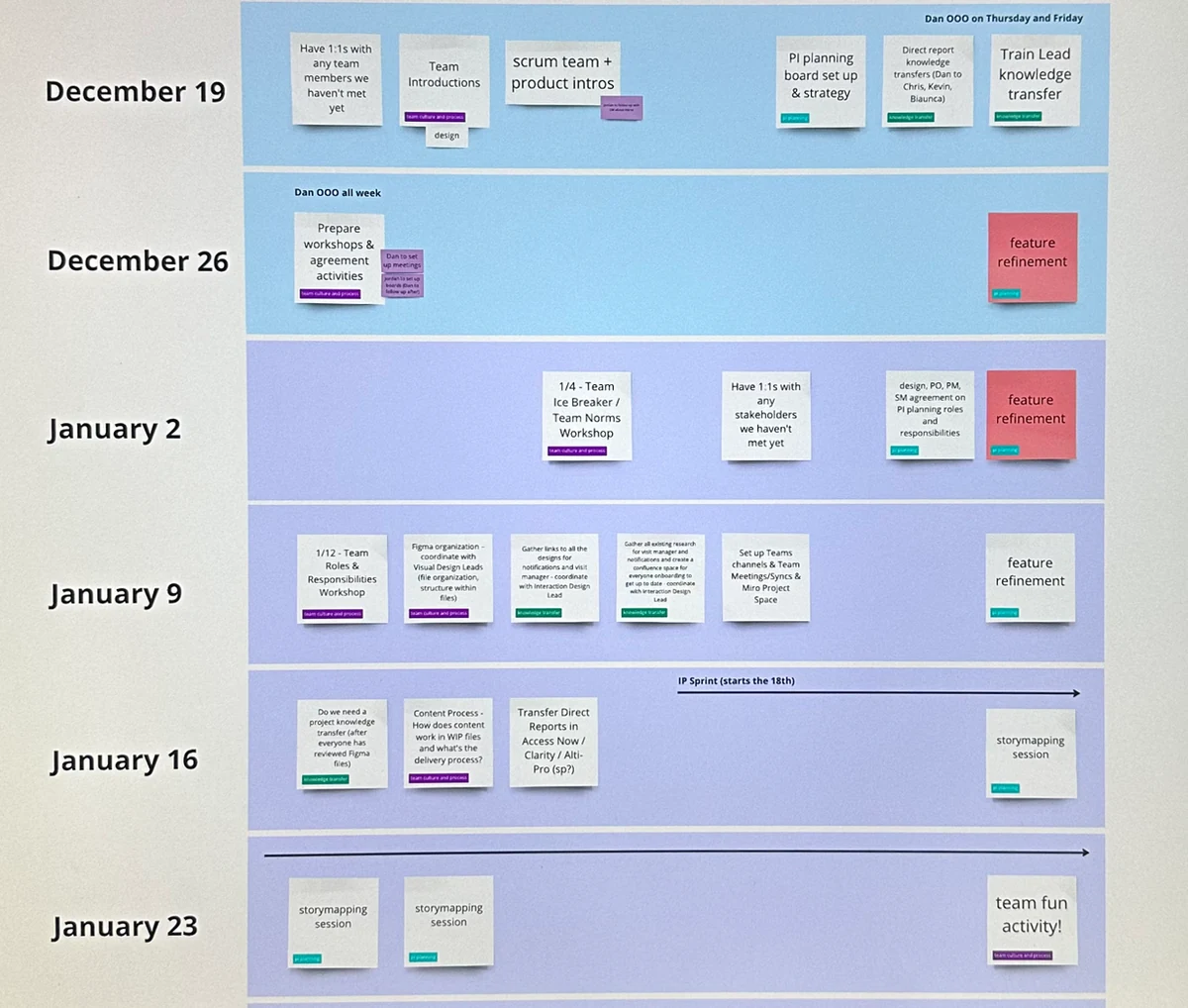
The six-week plan — mapped out before the re-org took effect.
I started with a simple icebreaker tied to the New Year — team members shared a photo from the previous year, a resolution, and something that makes them smile. It sounds small, but for a group that had never met, it was the first moment of genuine human connection, and that matters.
Next, I facilitated a values workshop with three prompts: What made the best team you've been on? What made the most difficult one? What do we agree to do to make our team a success? We voted on themes, I synthesized the top values with the team, and turned them into a Team Values and Collaboration Agreement published to our Confluence space.
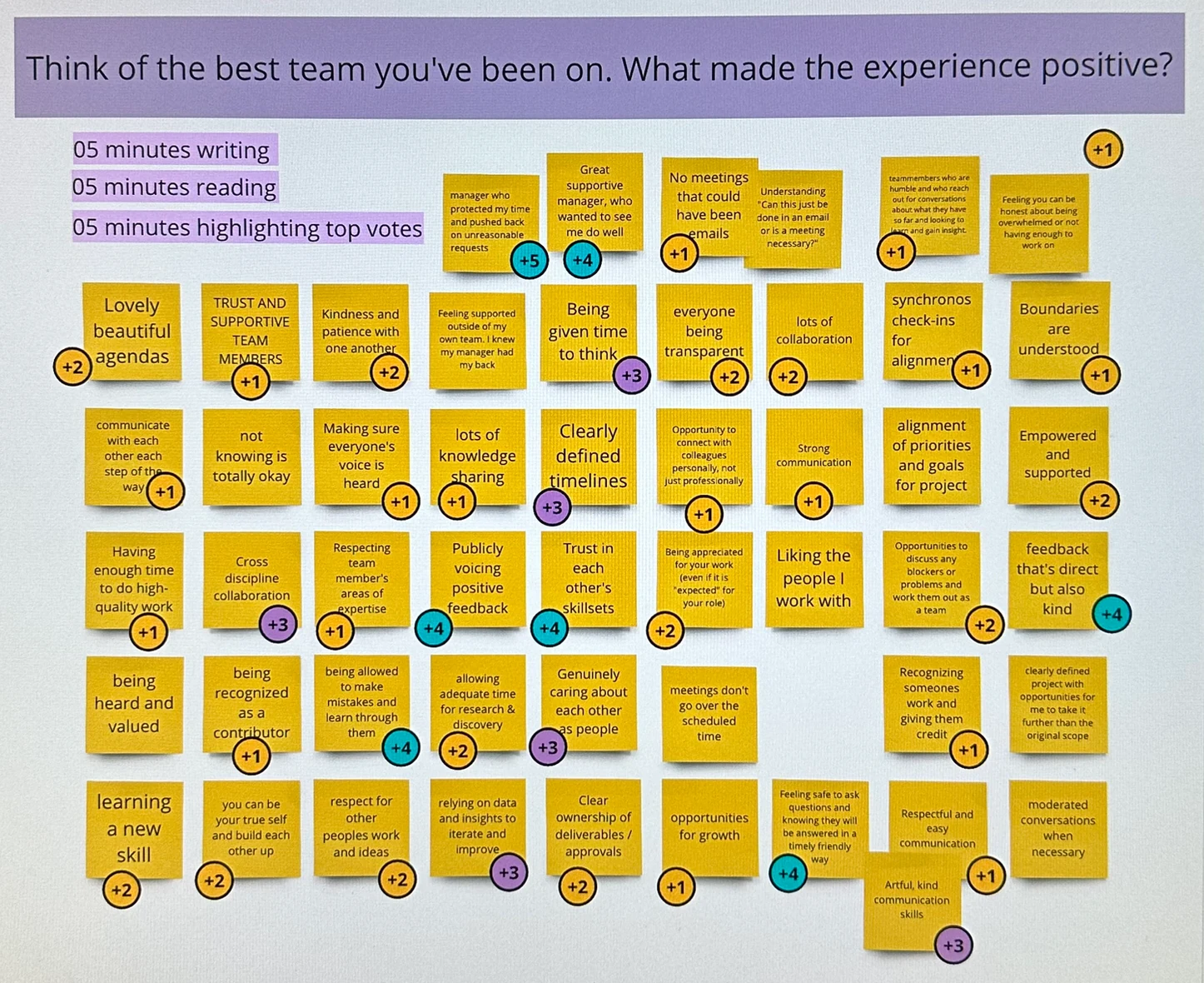
What makes a positive team culture — sticky note output from the workshop.
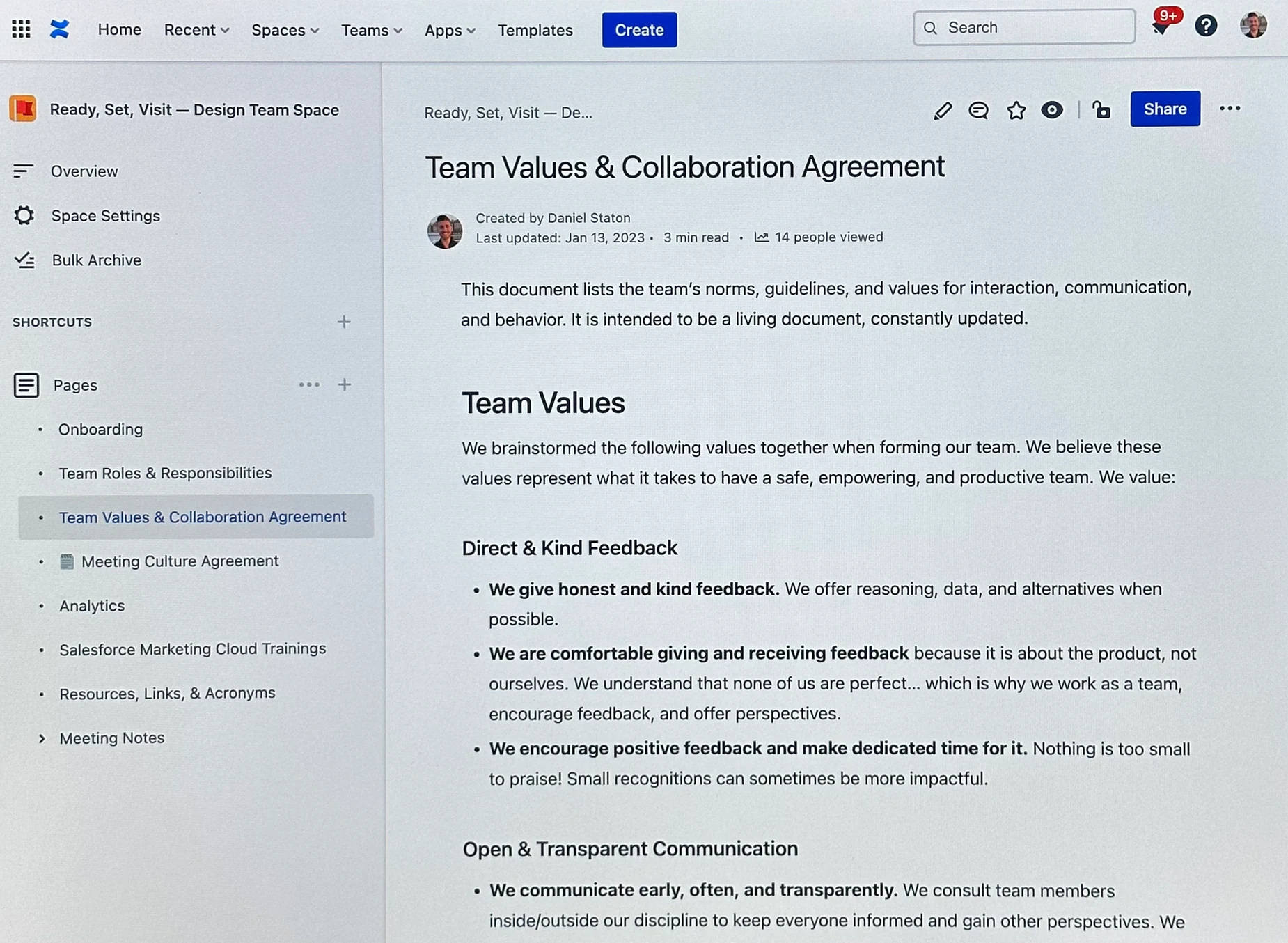
The resulting Team Values and Collaboration Agreement — published for the whole team to refer back to.
The re-org introduced new roles (Interaction Design Lead, Visual Design Lead) that were intentionally flexible for each team's needs. Jordan and I ran a workshop where each person wrote their own responsibilities, then visited other role columns to add what they needed from each other. We reviewed gaps and questions together as a group.
From that workshop, Jordan and I built a RACI diagram — reviewed with designers, content, accessibility, research, design leadership, and Product — then published it officially to our Confluence space. Everyone now had a clear picture of who was responsible for what.
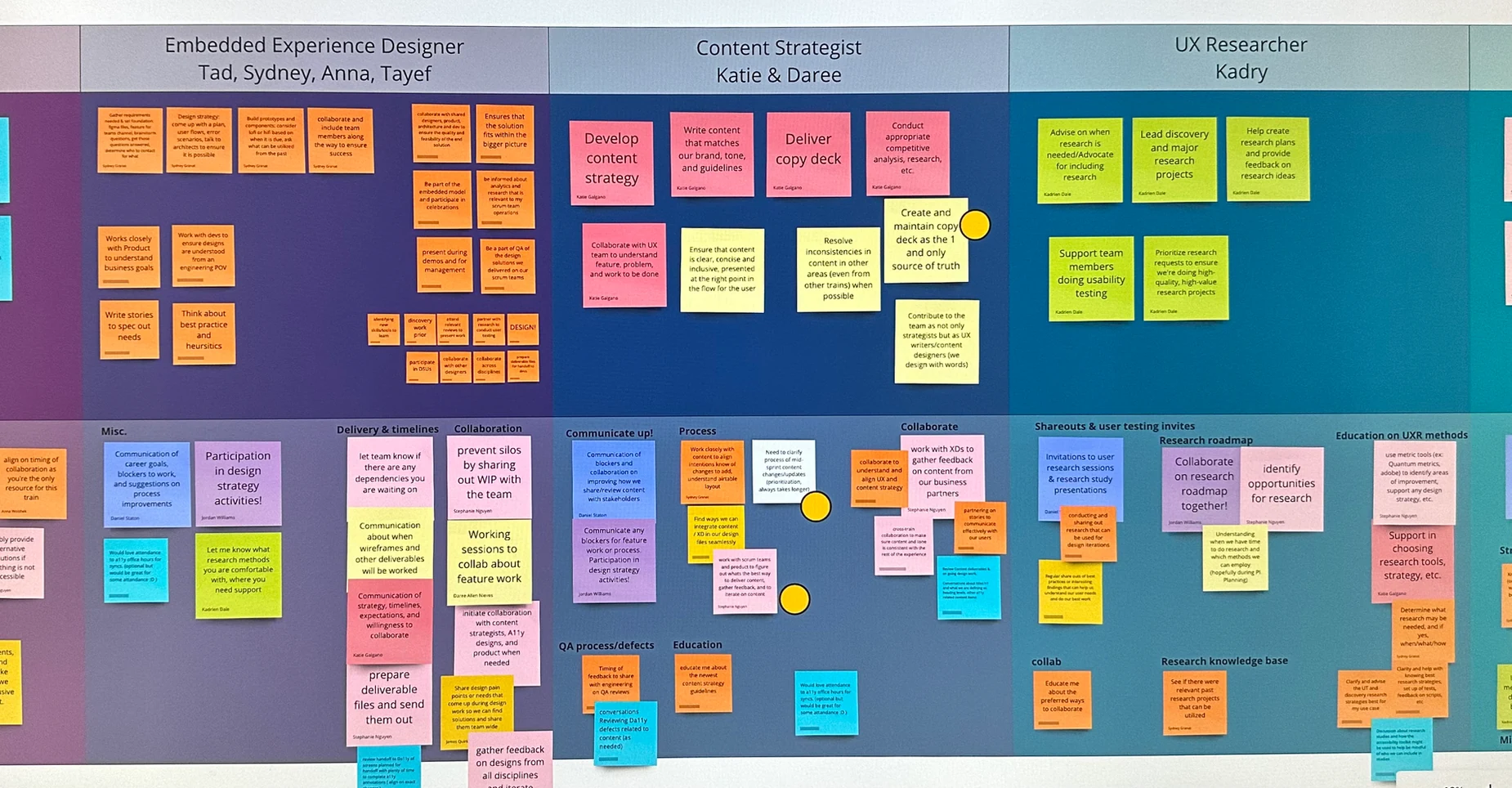
Workshop output: defined responsibilities and cross-functional needs for each role.
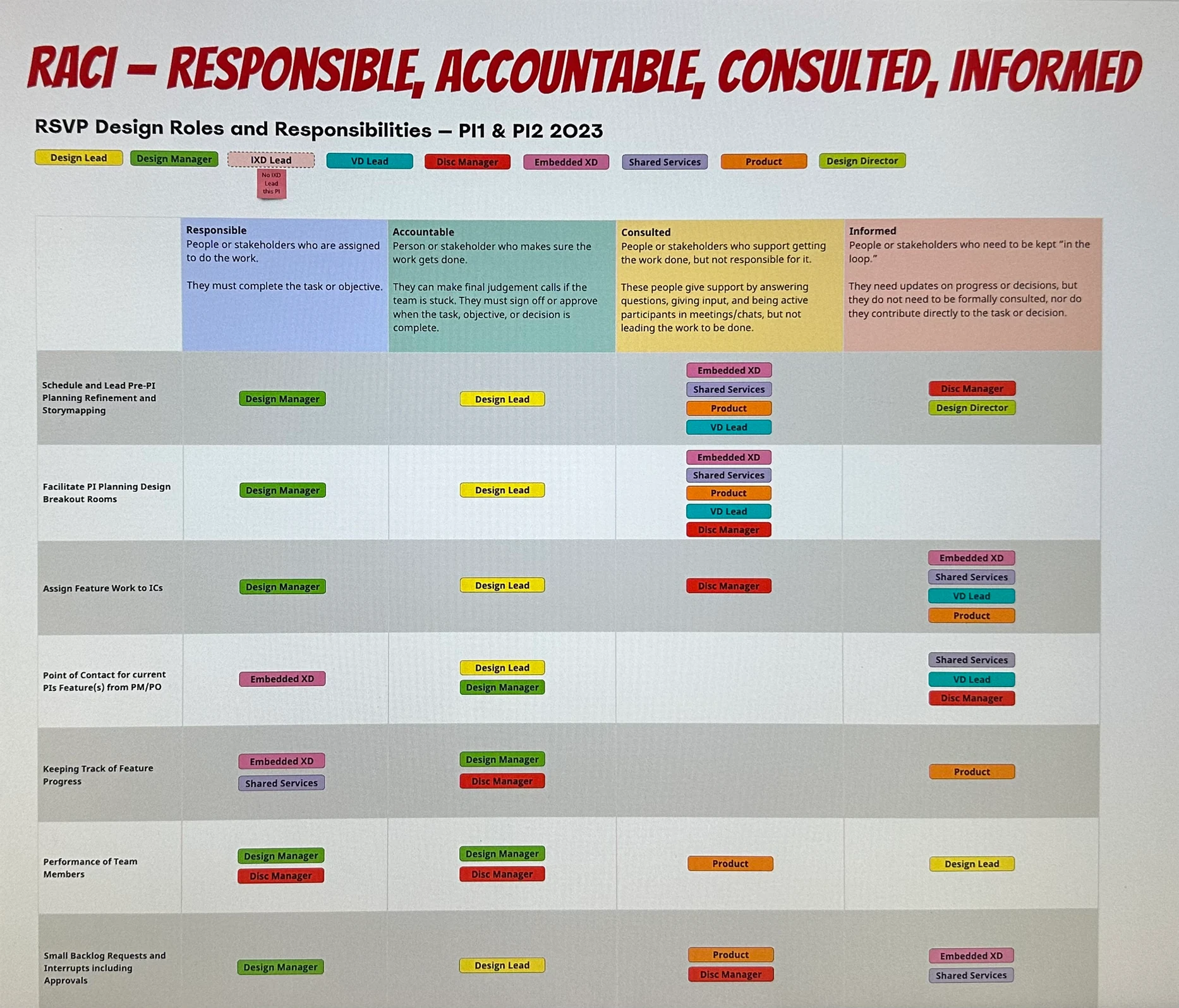
The final RACI diagram — clearly defining ownership across the design process.
Jordan and I ran a "User Manual" activity — each team member shared their working style, values, what they don't have patience for, how they prefer to be communicated with, how others could help them, and what people often misunderstand about them. We summarized the common themes for the whole team, making it easy to see what everyone had in common while still recognizing each person's individual needs.
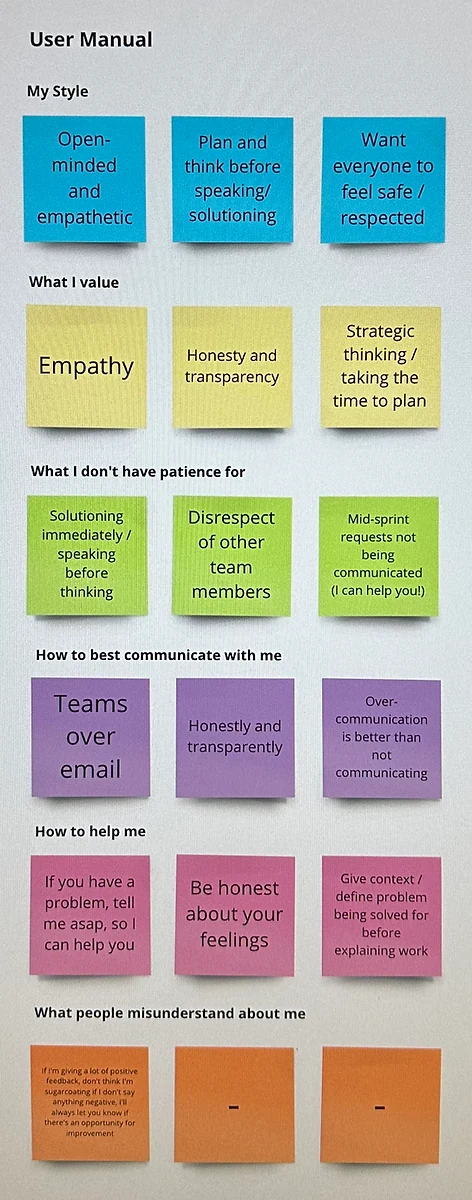
An example User Manual — each person's working style, values, and communication preferences shared with the team.
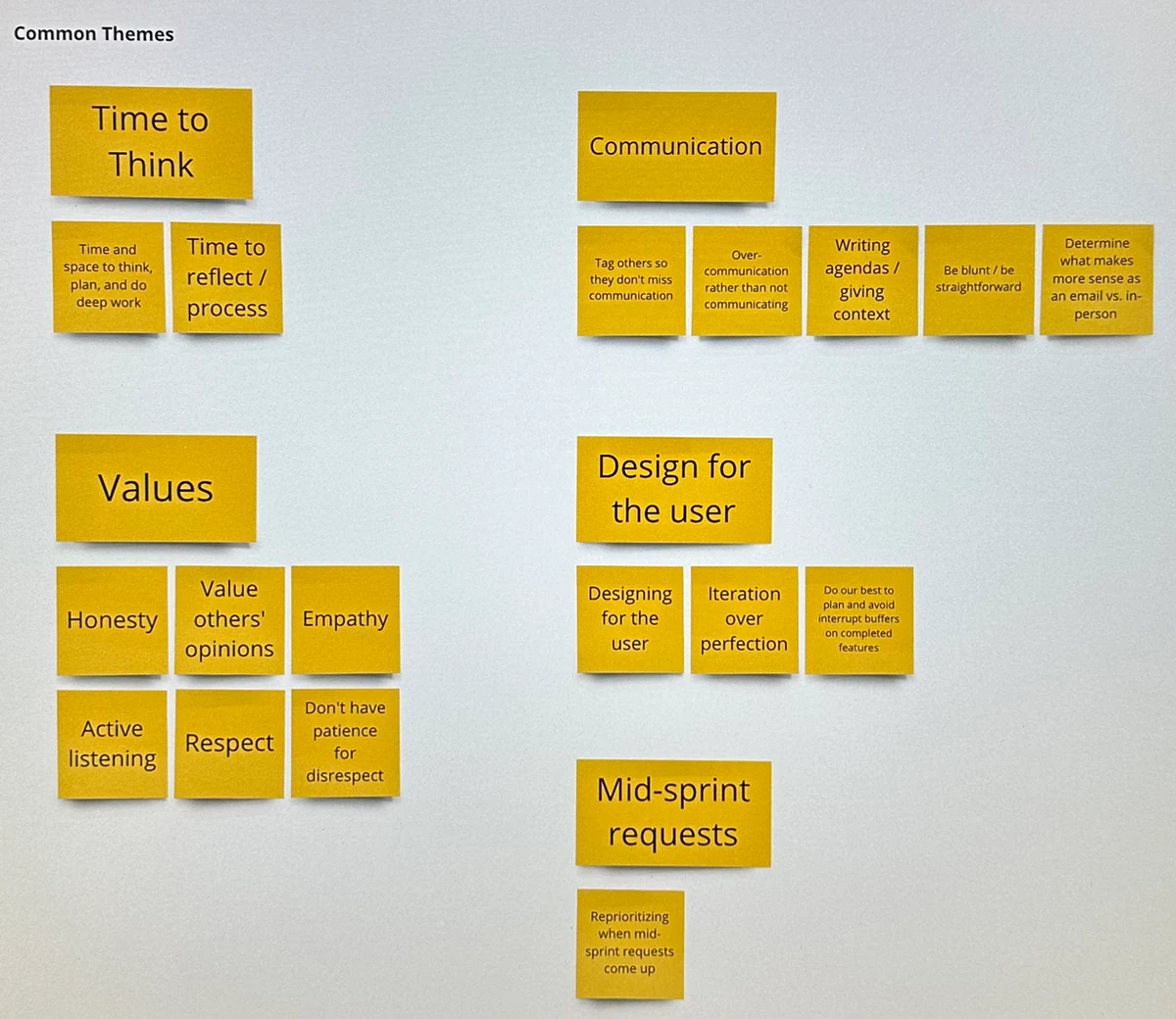
Themes from the activity — what the team shared in common, and what made each person unique.
We let the team vote on which meetings were actually worth having, then I scheduled exactly those. The meetings we landed on:
After the first quarter, we ran a retro on this structure. Based on feedback, I moved daily stand-ups to async Slack, extended Design Feedback sessions to 90 minutes, and set up weekly Office Hours with Jordan so the team always had dedicated time with us.
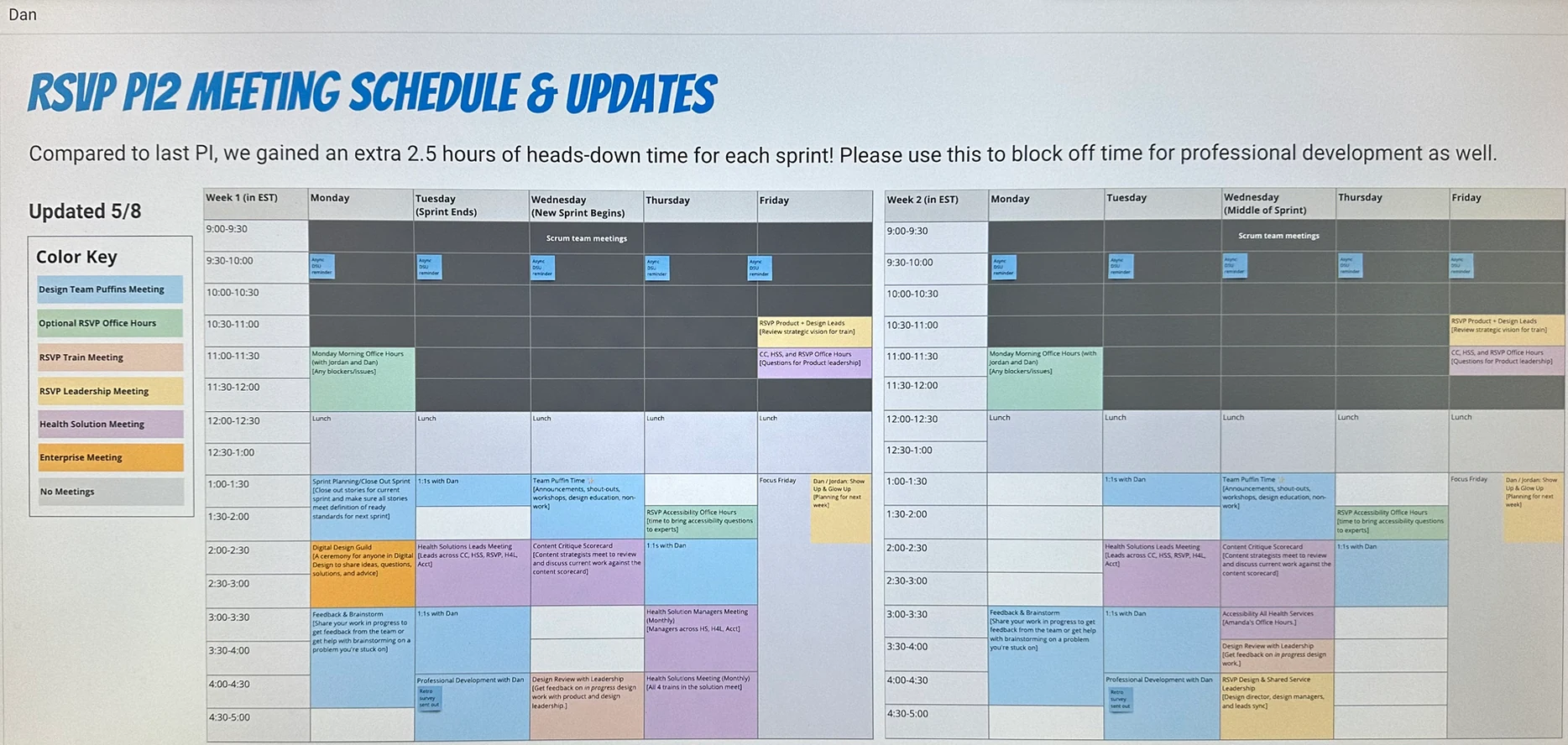
The updated meeting calendar after our retrospective — saving 2.5 hours per week while keeping what mattered most.
Every sprint I facilitated a "Rose, Thorn, Bud" retro where the team called out what was working, what wasn't, and what ideas they had for improvement. I always held myself accountable to previous sprint's action items before adding new ones. Over time, team members saw their feedback lead to real changes — which made them more willing to share.
Jordan and I also created a happiness survey to track how the team was feeling beyond just the work itself. The team's happiness averaged consistently high, and continued to improve as we responded to what they told us.
Jordan had the idea to send a weekly newsletter to the team and Product leadership, covering design deadlines, upcoming presentations, learning opportunities, and team shout-outs. We wrote it together every Friday. Feedback from both the team and from Product was genuinely positive — it kept everyone aligned and set expectations for the week ahead.
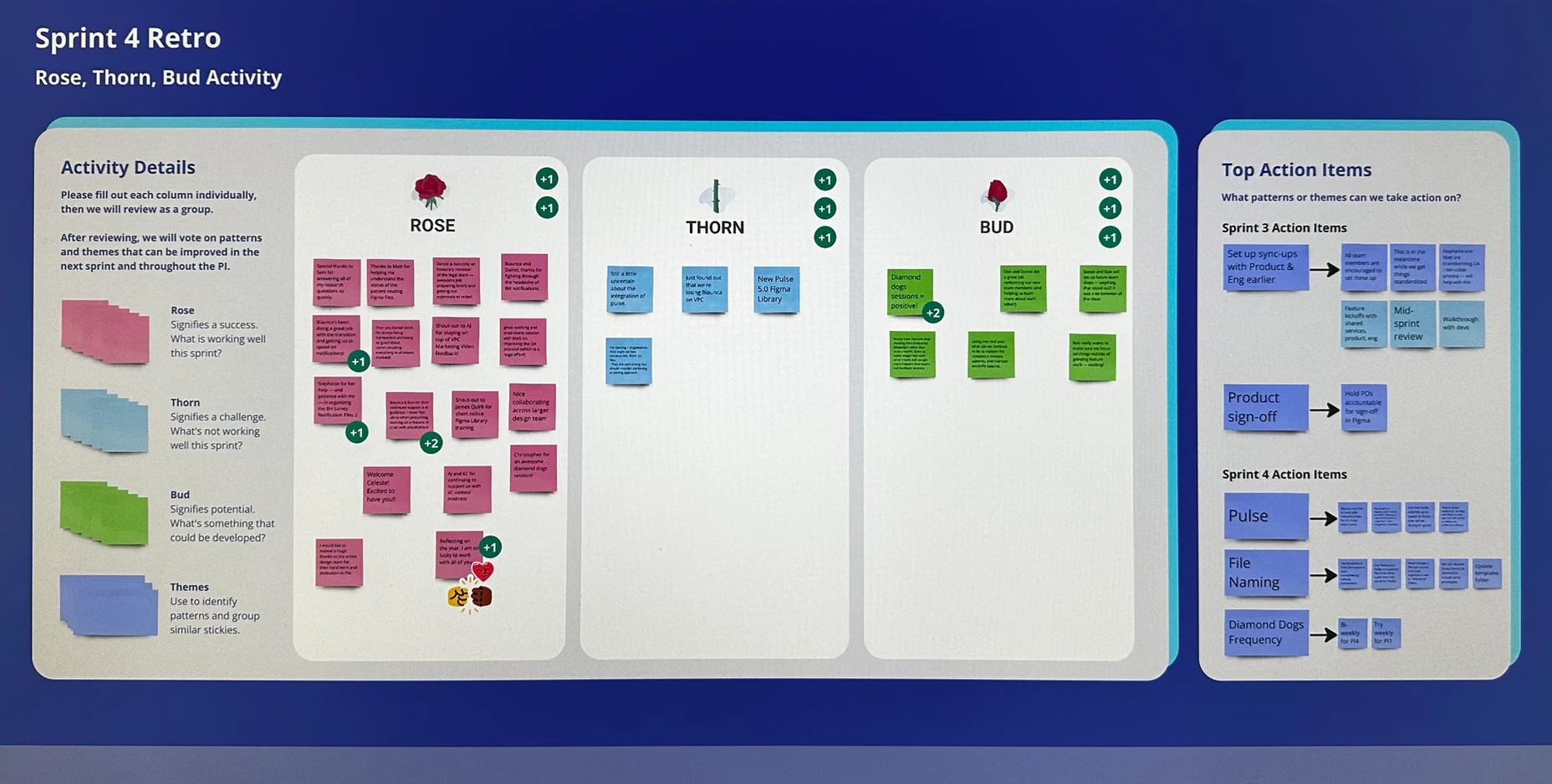
Sprint retrospective using Rose, Thorn, Bud — a safe space for honest feedback every sprint.
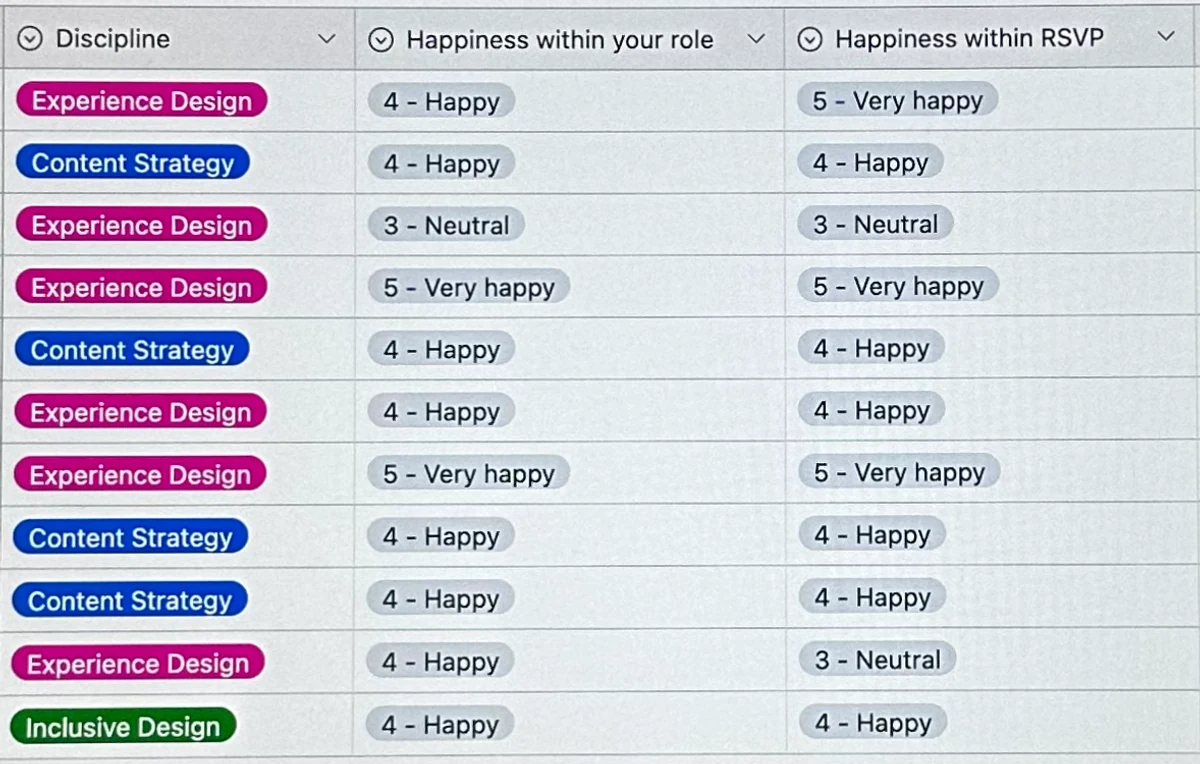
Team happiness survey results — consistently high across all the key categories we tracked.