My Role
Sr. Experience Design Manager
I created the Professional Development Framework and run monthly 1:1 sessions with each designer. I help set goals, learning objectives, and checklists tailored to their career path — and look for ways to connect their growth to real impact on the business.
Timeframe
December 2021 – Present
An ongoing practice across both CVS Health design manager roles. The framework was built early and has been refined continuously based on what actually works for each person.
Skills
Coaching plus Leadership
Professional Development, Mentoring, Coaching, Career Advancement, Design Training, Team Management, Education
The Framework
From IEP to designer development
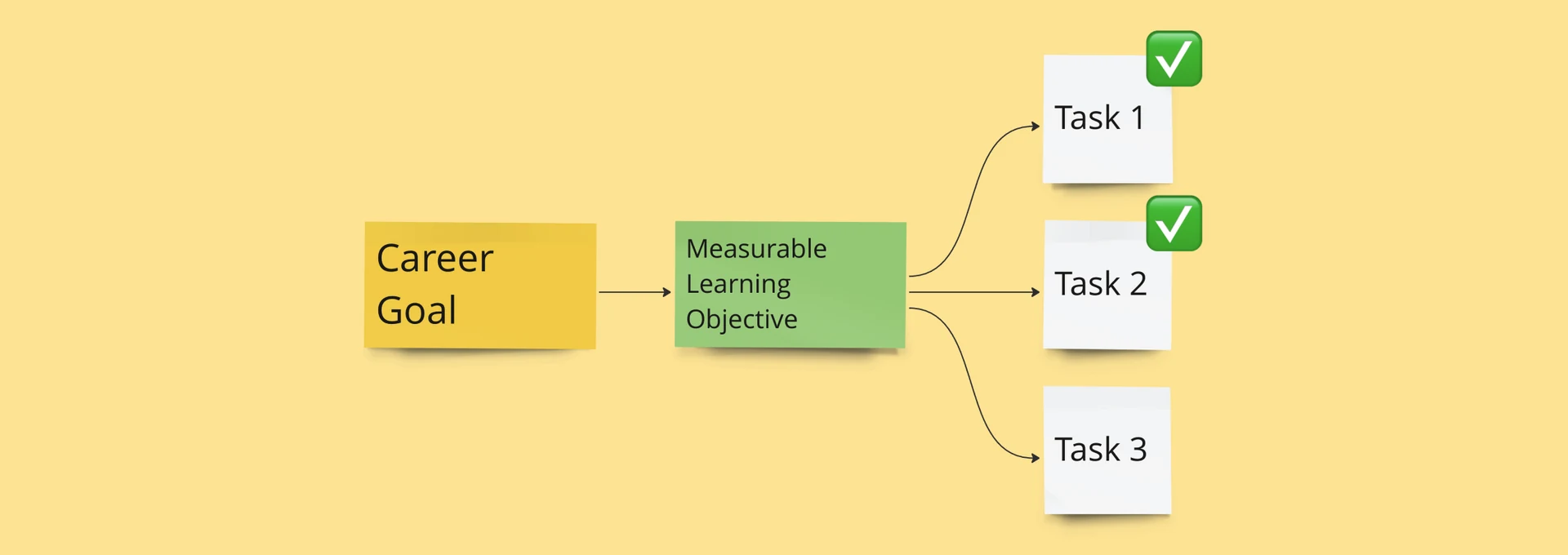
My background as a special education teacher gave me a ready-made starting point for individual coaching. A teacher uses an Individualized Education Plan (IEP) to help each student meet specific goals through structured learning objectives and checklists. I adapted this format into a Professional Development Framework built around designers.
- Goals: We brainstorm career goals together through a facilitated discussion. The designer chooses what they're most passionate about, and I help shape them toward what will also have a real positive impact on the business.
- Learning Objectives: Together we write a clear statement for what success looks like when the goal is met — something concrete and measurable.
- Checklist: We break each goal into actionable steps, making long-term goals feel much more approachable.
Sessions run monthly. The first three sessions are held close together to get everything established. After that, I meet with each designer monthly to review progress, mark achievements, and set new goals as needed.
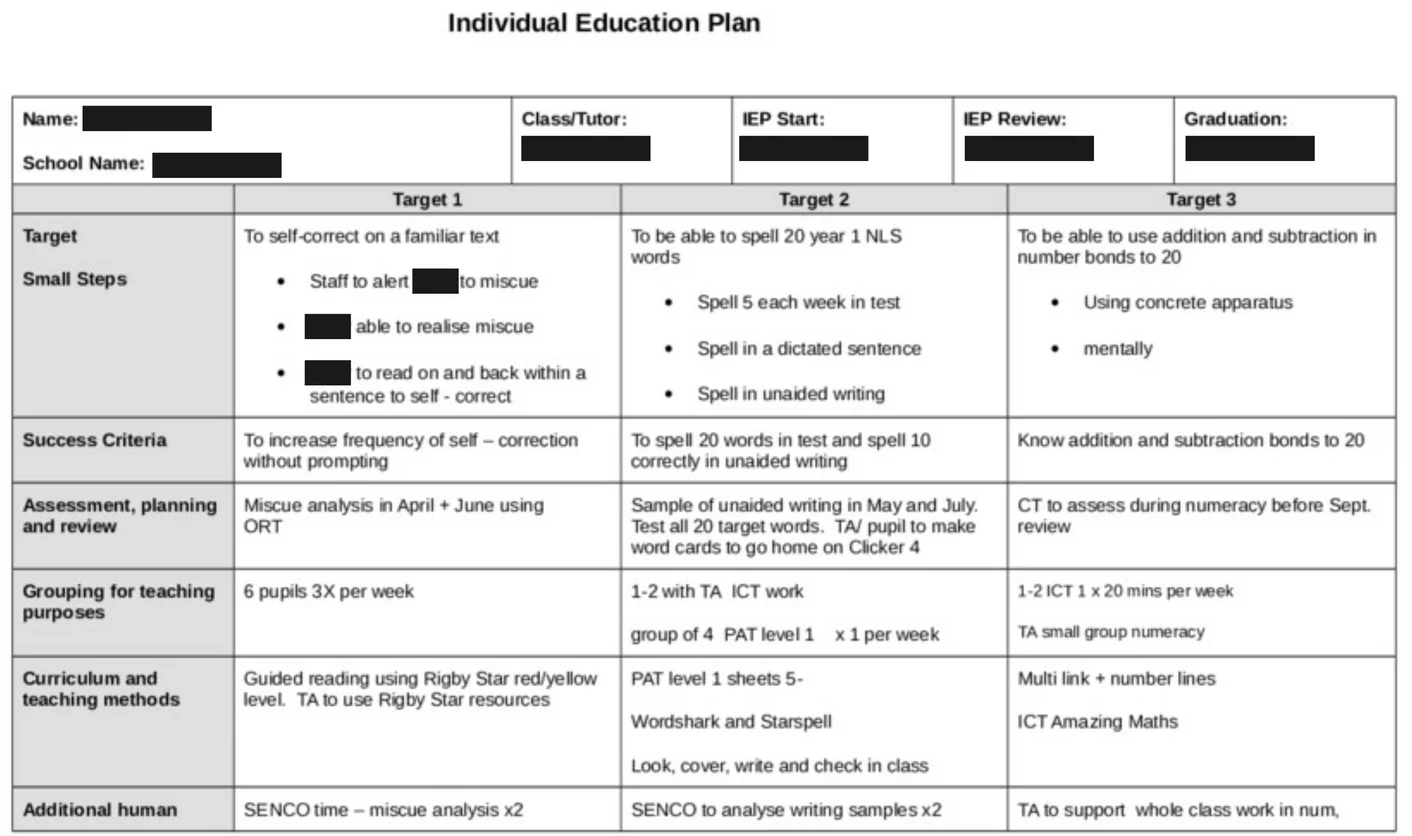
The IEP that inspired the framework — structured goals, objectives, and checklists for each person.
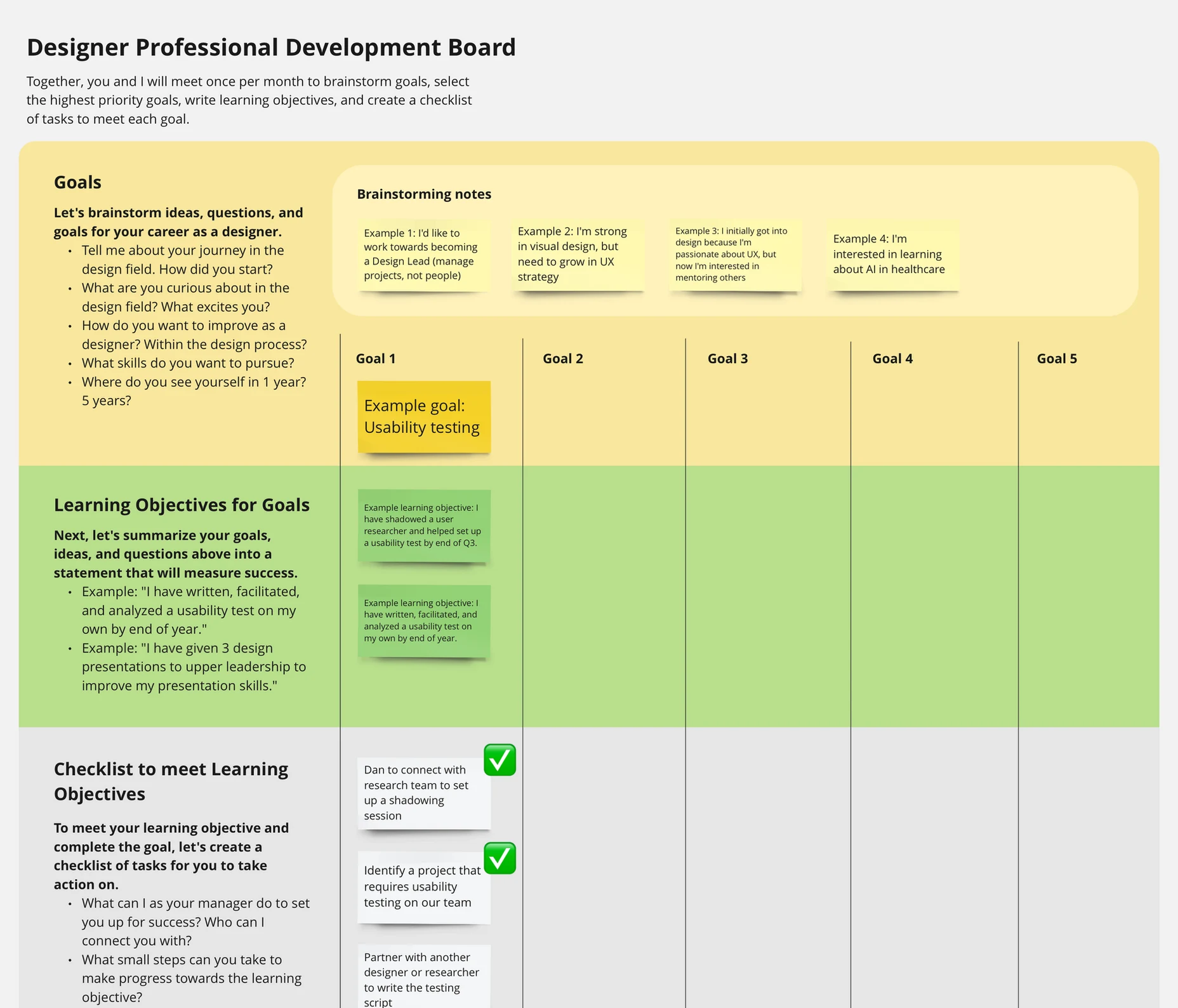
The designer-adapted framework — goals, learning objectives, and a checklist in one shared document.
Examples
Four ways I've coached designers to grow
Example 01
Getting a designer promoted to Design Lead
A designer on my team was executing well across all parts of the process and told me they wanted to grow into a Lead role. I assessed their current skillset against the job description and we set specific goals together: demonstrating mastery in Figma and UX, mentoring other designers, leading projects independently, and raising their visibility with design leadership. I researched courses, paired them with a junior designer to mentor, gave them design system projects to lead, and helped them run a workshop to upskill the broader team. After meeting all of the goals we had set, they were promoted.
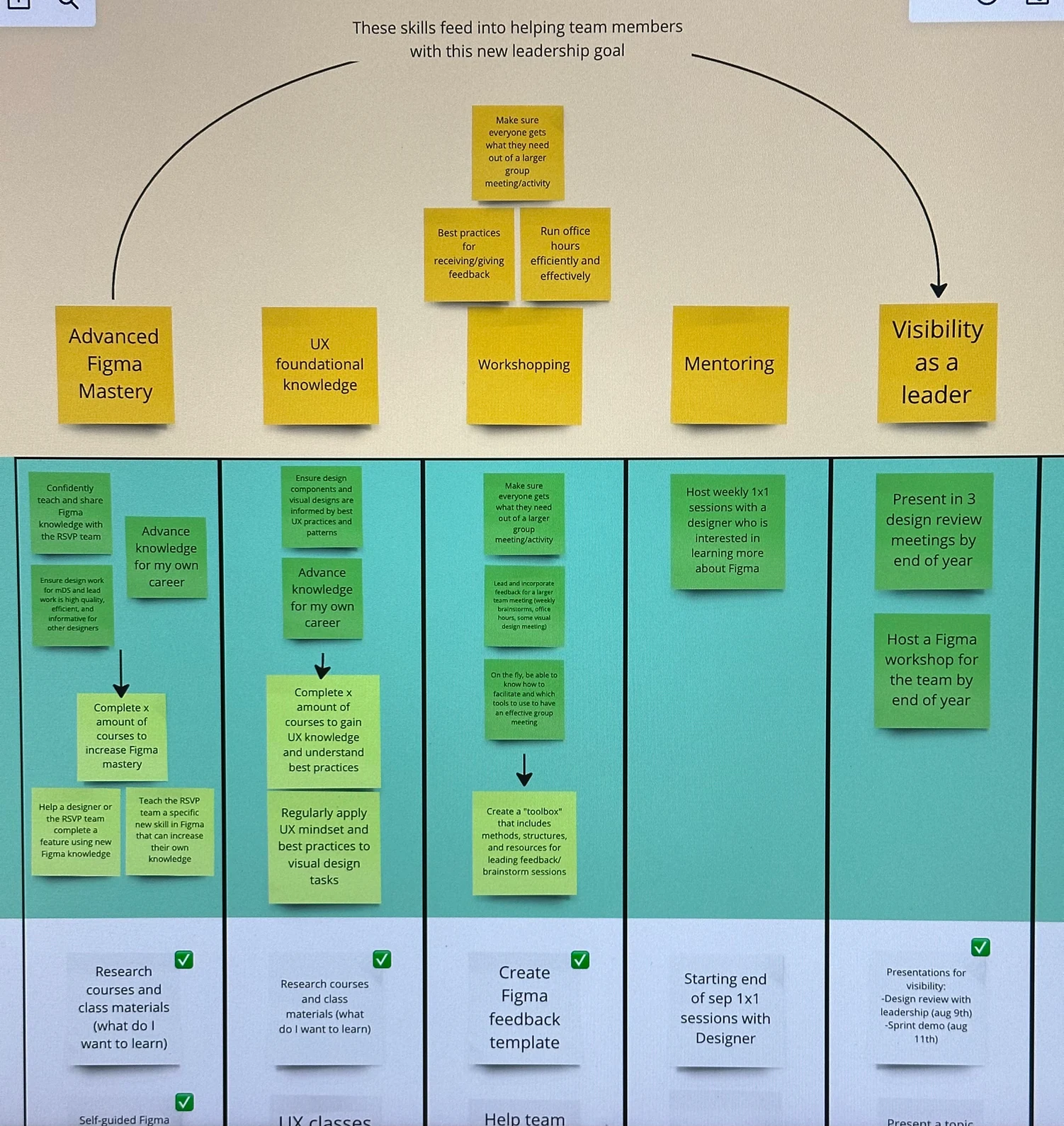
Goals set for the promotion path: Figma mastery, UX knowledge, workshopping, mentoring, and leadership visibility.
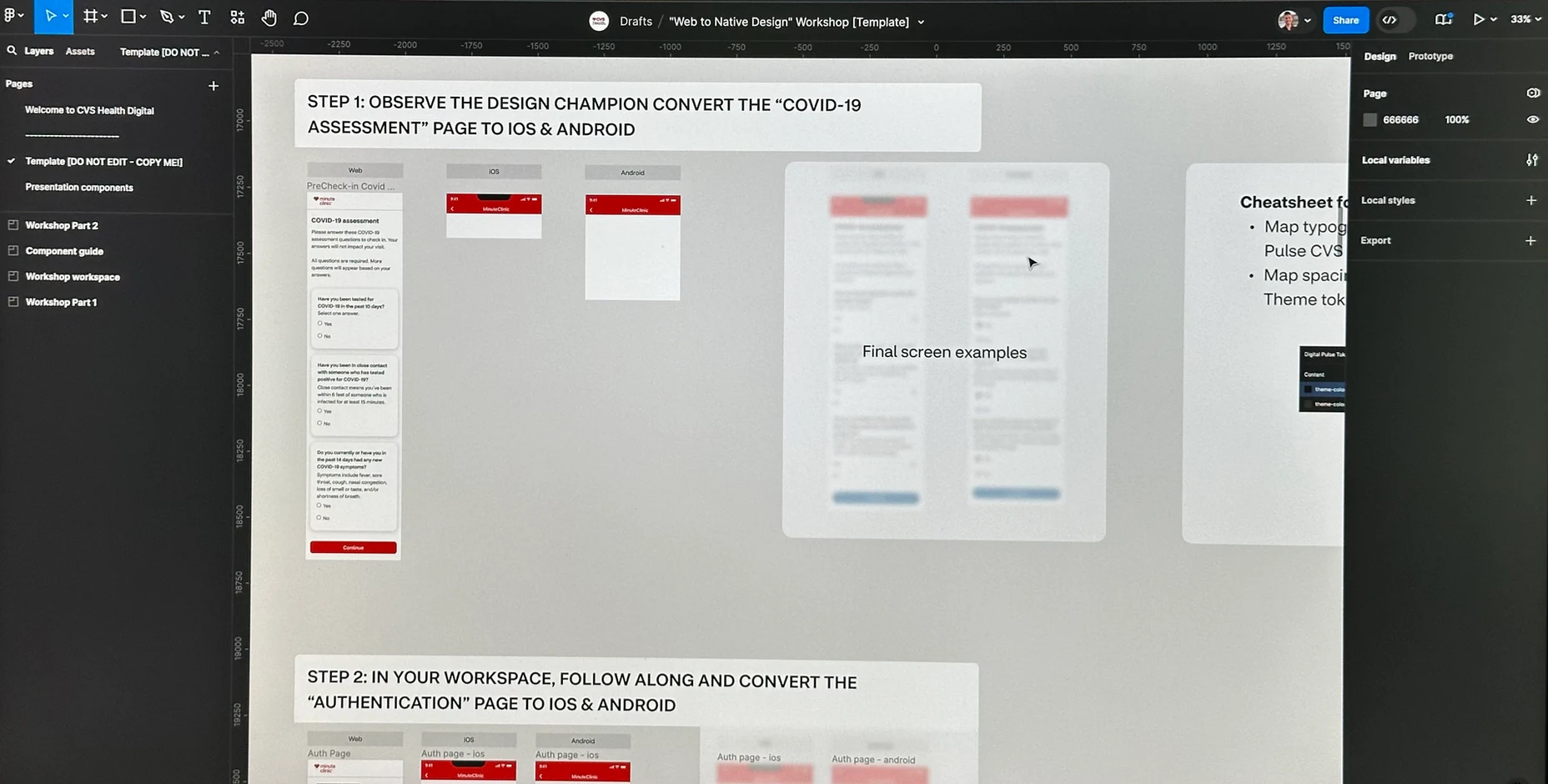
The designer's workshop on converting web designs to native iOS/Android — raising visibility across the design org.
Example 02
Coaching a designer to improve how they give feedback
After a re-org, a new direct report mentioned that a peer had flagged in an end-of-year review that their design feedback could come across as harsh. They brought it up as their number one priority to work on — they're genuinely collaborative and really wanted to improve. I introduced the Radical Candor framework, worked through specific phrasing with them, and set a mid-year milestone to collect peer feedback. By mid-year, all five peers rated them 5/5 on how they give and receive feedback, with comments like "Gives constructive feedback in helpful and respectful ways" and "Great at asking questions."
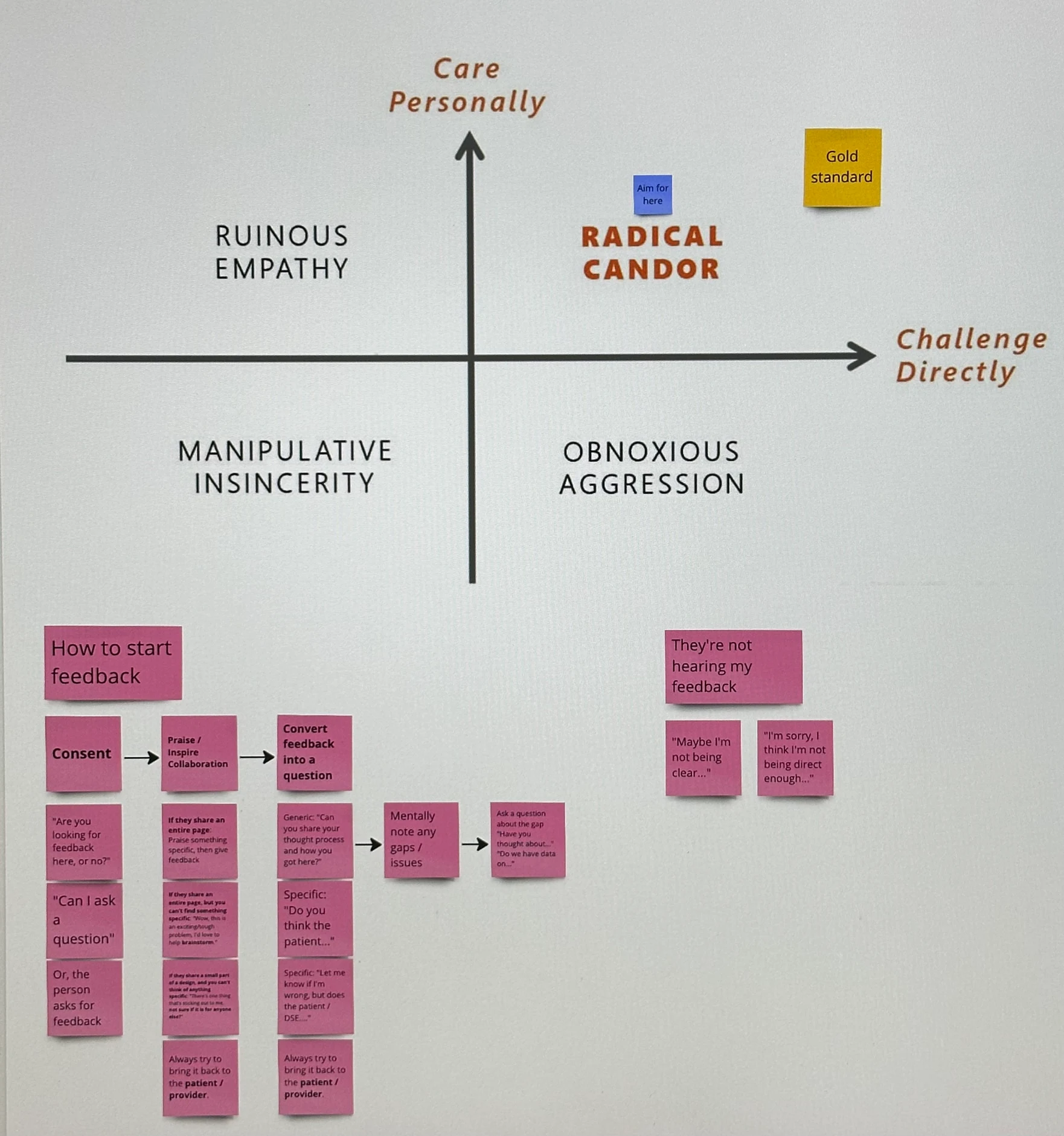
Radical Candor — the framework I used to help them deliver honest feedback with genuine care.
Example 03
Carving out a research-focused role that benefitted the whole team
One of my direct reports told me they weren't feeling fulfilled by UI-focused work. They were great at it and always delivered on time, but it just wasn't where their heart was. Their real strengths and passions were in early UX, research, and discovery. We completely reset their goals — connected them with a researcher for mentorship, shifted their project assignments toward discovery and research work, and got them certified in Quantum Metrics. This actually freed up other designers to focus on what they loved too, and this person started delivering high-quality research work faster than anyone expected.
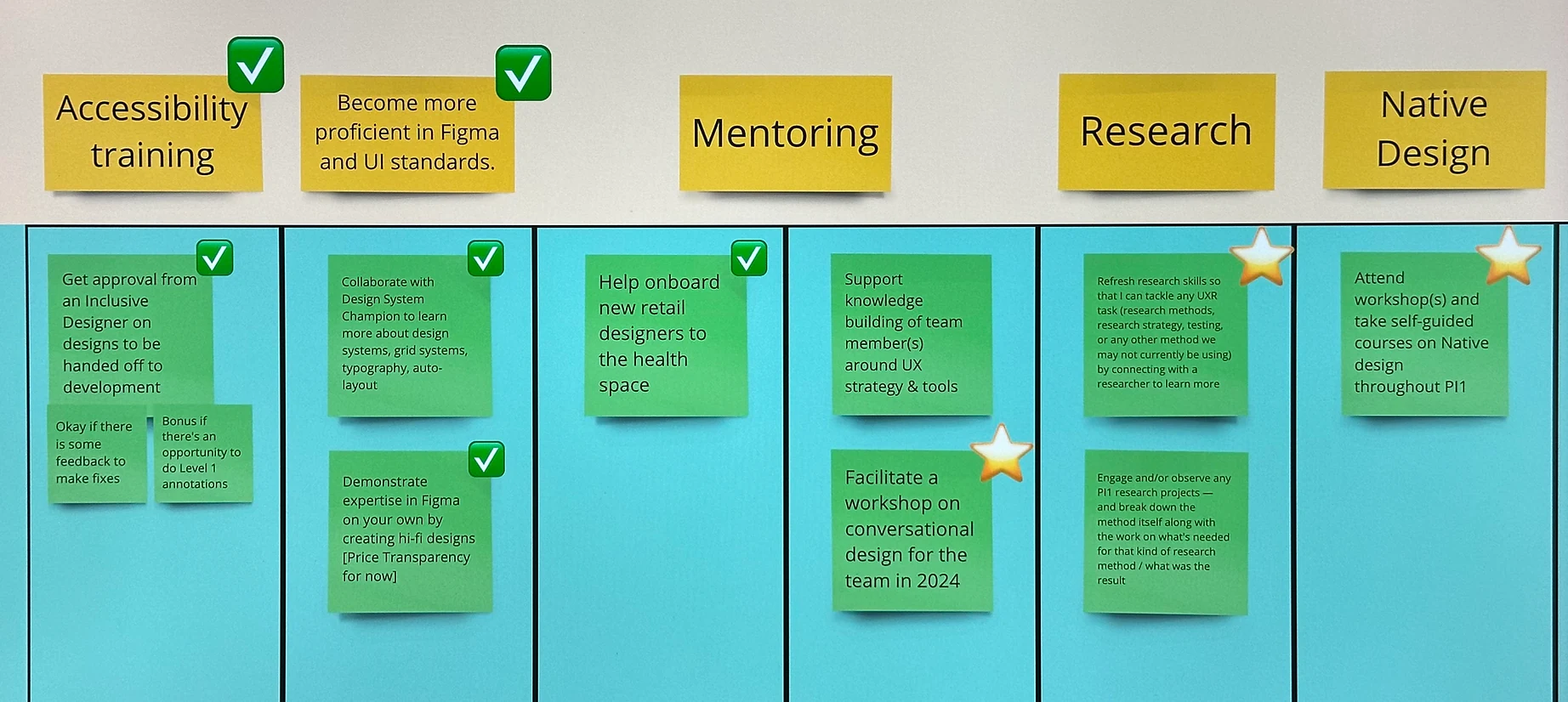
Redesigned goals aligned with this designer's passion for research, discovery, and early UX work.
Example 04
Empowering designers to improve our design process
Two designers each had a specific goal: they wanted to improve how design and engineering collaborated. I set it as a formal goal for both of them, gave them a starting framework, and then stepped back. They ran with it — they interviewed designers and engineers, mapped collaboration gaps, proposed Mid-Sprint Dev Syncs, and created a shared Design QA checklist. I had them present these improvements to Directors, Managers, and Leads across the org. Another team adopted the model entirely. This is one of my favorite examples of what happens when you give designers real ownership of something they care about.
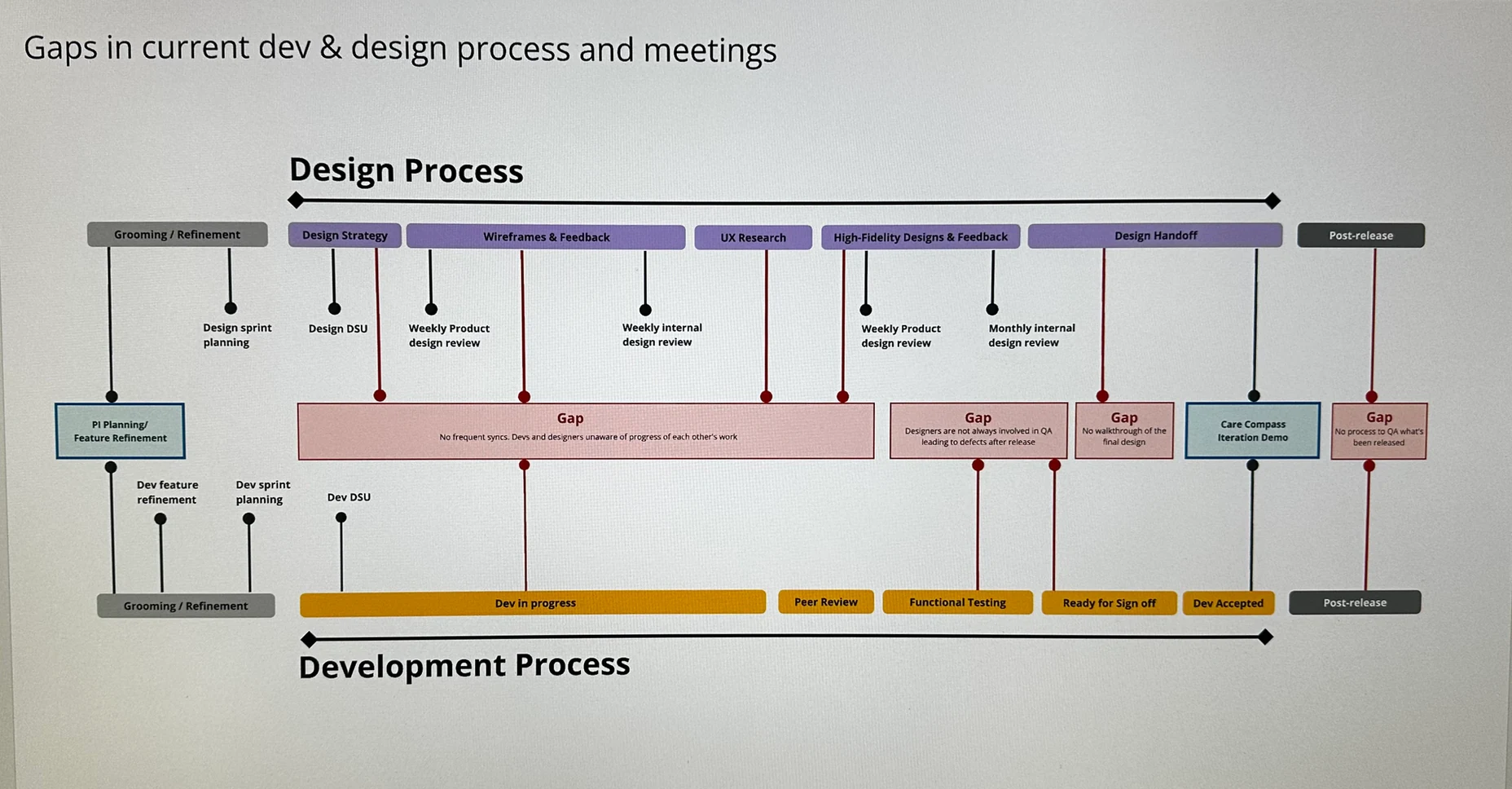
The collaboration gap map the designers created — identifying where things were breaking down and proposing concrete solutions.
Celebrating Growth
Tracking and celebrating achievements every month
At the end of each monthly session, I walk through each designer's achievements from the past month — design deliveries, completed goals, career milestones, shout-outs received, process contributions. These go into a calendar view so we can look back on the full year together during end-of-year assessments. Seeing everything laid out like that is often a meaningful moment.
At the end of each quarter, I hold a team celebration, summarizing each person's contributions and opening the floor for additional shout-outs. It's a chance to pause, recognize each other, and look ahead with genuine excitement.
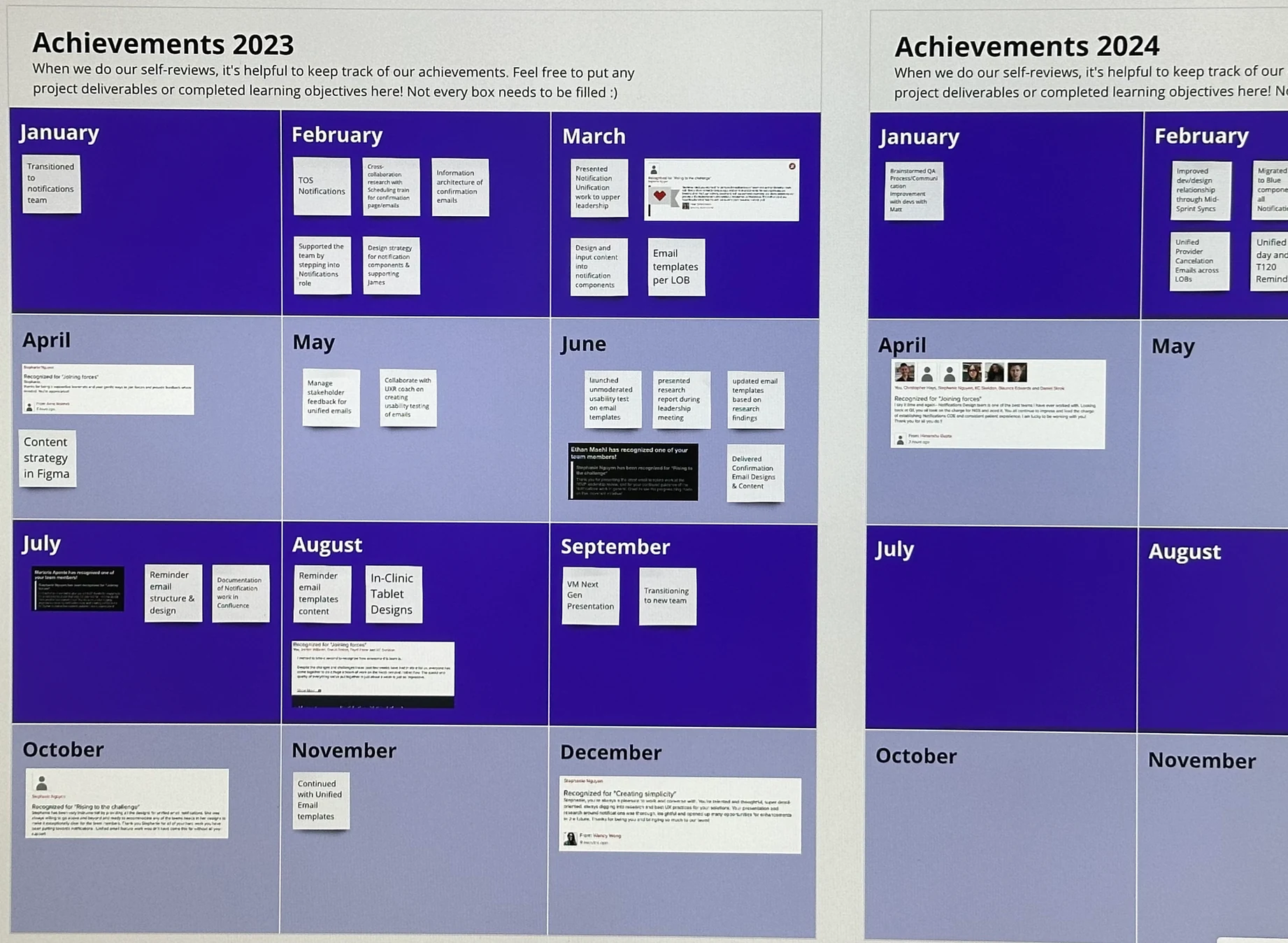
Monthly achievement calendar — a visual record of growth throughout the year.
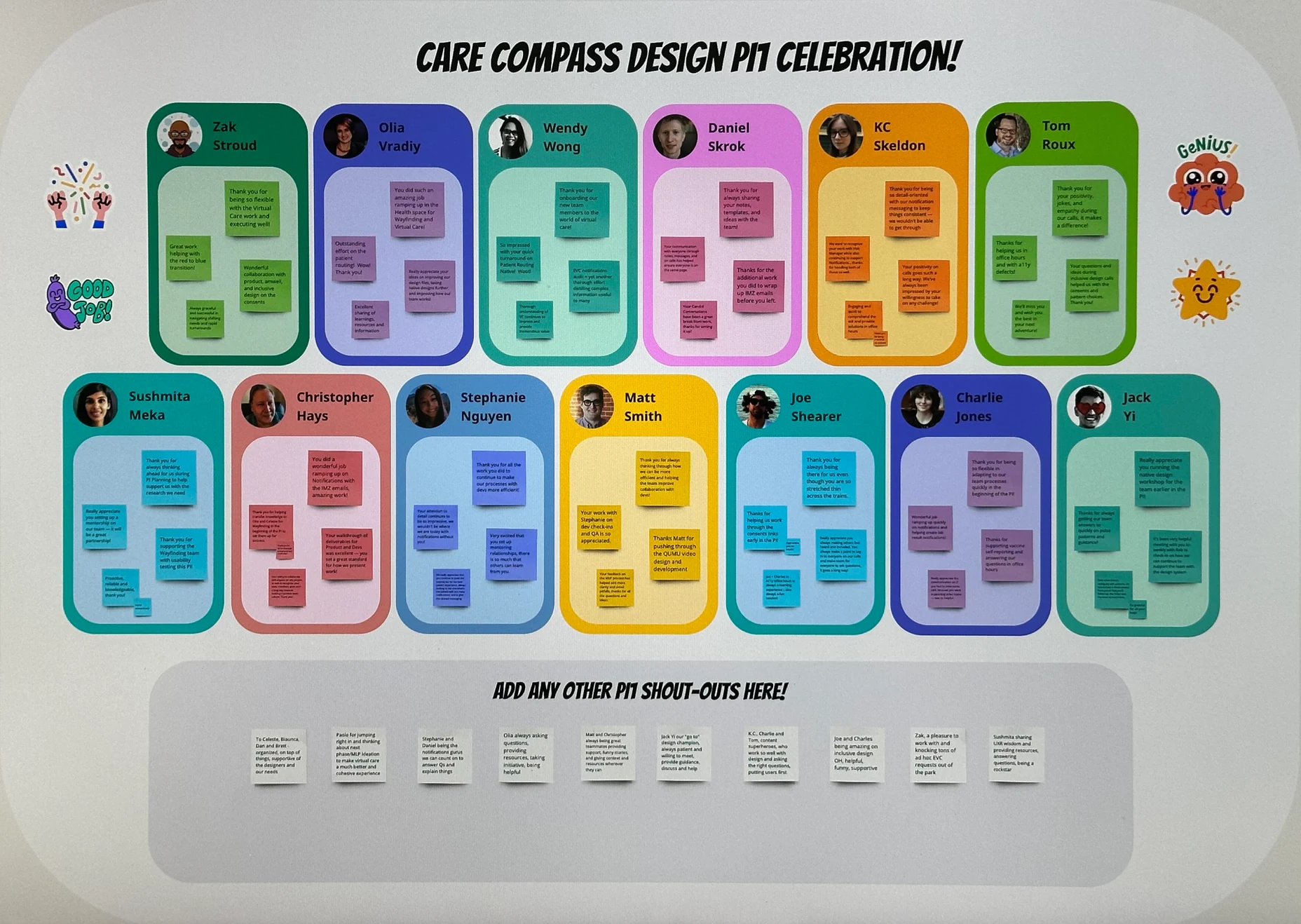
End-of-quarter team celebration — achievements and shout-outs for every team member.
From the company engagement survey
My direct reports anonymously reported that their highest satisfaction at work is their relationship with me as their manager, the feedback I give, and that I value them and their perspectives. That means more to me than any other metric.