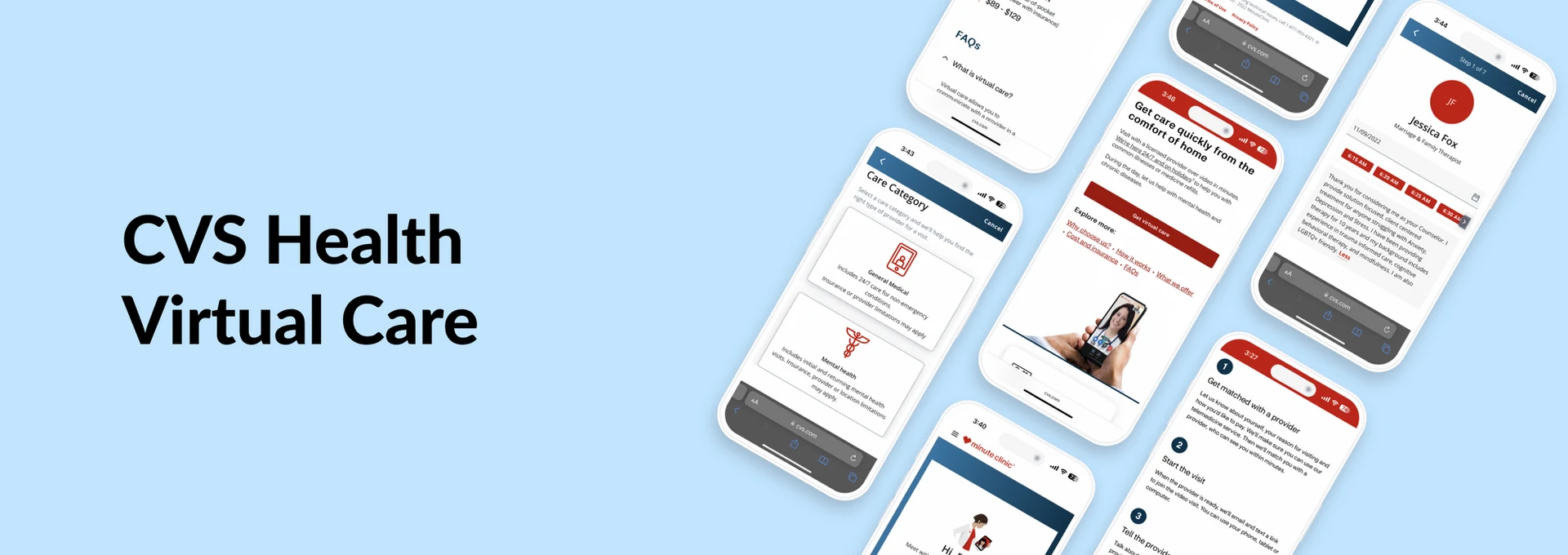
Leading a cross-functional team of 11 to design and launch two brand-new virtual care services — from zero to over one million patient visits in 2023.
During the pandemic, CVS Health received clear feedback that their existing virtual care services were difficult to use and riddled with technical issues. Our team was tasked with starting fresh — designing two completely new services:
Two core problems to solve: help patients understand what each service actually offered, and create a registration experience smooth enough that they'd make it all the way through to their first visit.
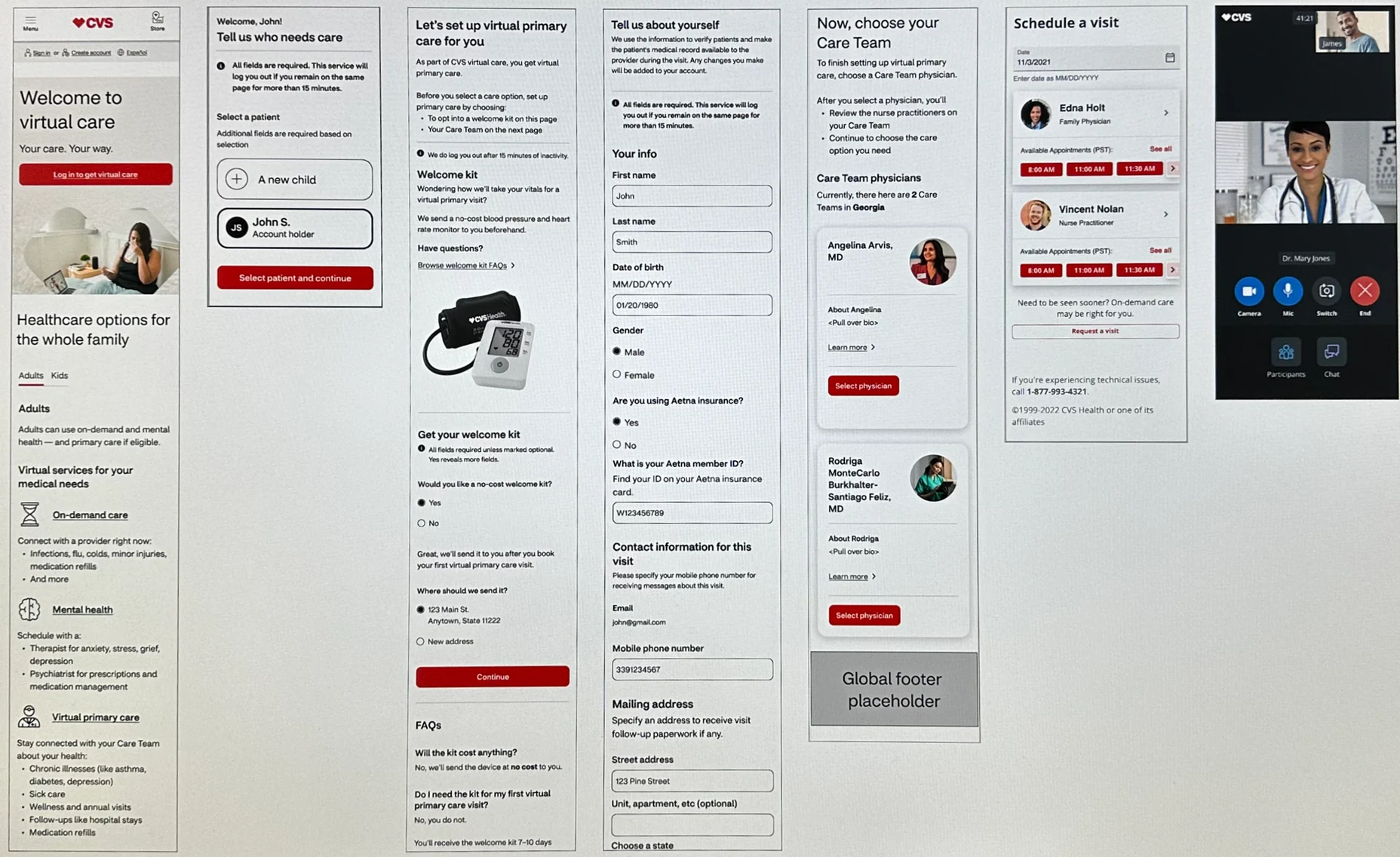
High-fidelity designs for the CVS Health Virtual Care and Virtual Primary Care registration experiences.
Each quarter, I met with Product leadership to understand upcoming features and make sure our approach made sense for patients. With that feature list, I worked with the design team to map every task needed to fully design each feature — user interviews, wireframing, usability testing, content drafts, accessibility reviews, and more. I ran weekly sprint grooming throughout the quarter to keep everyone moving at a sustainable pace.
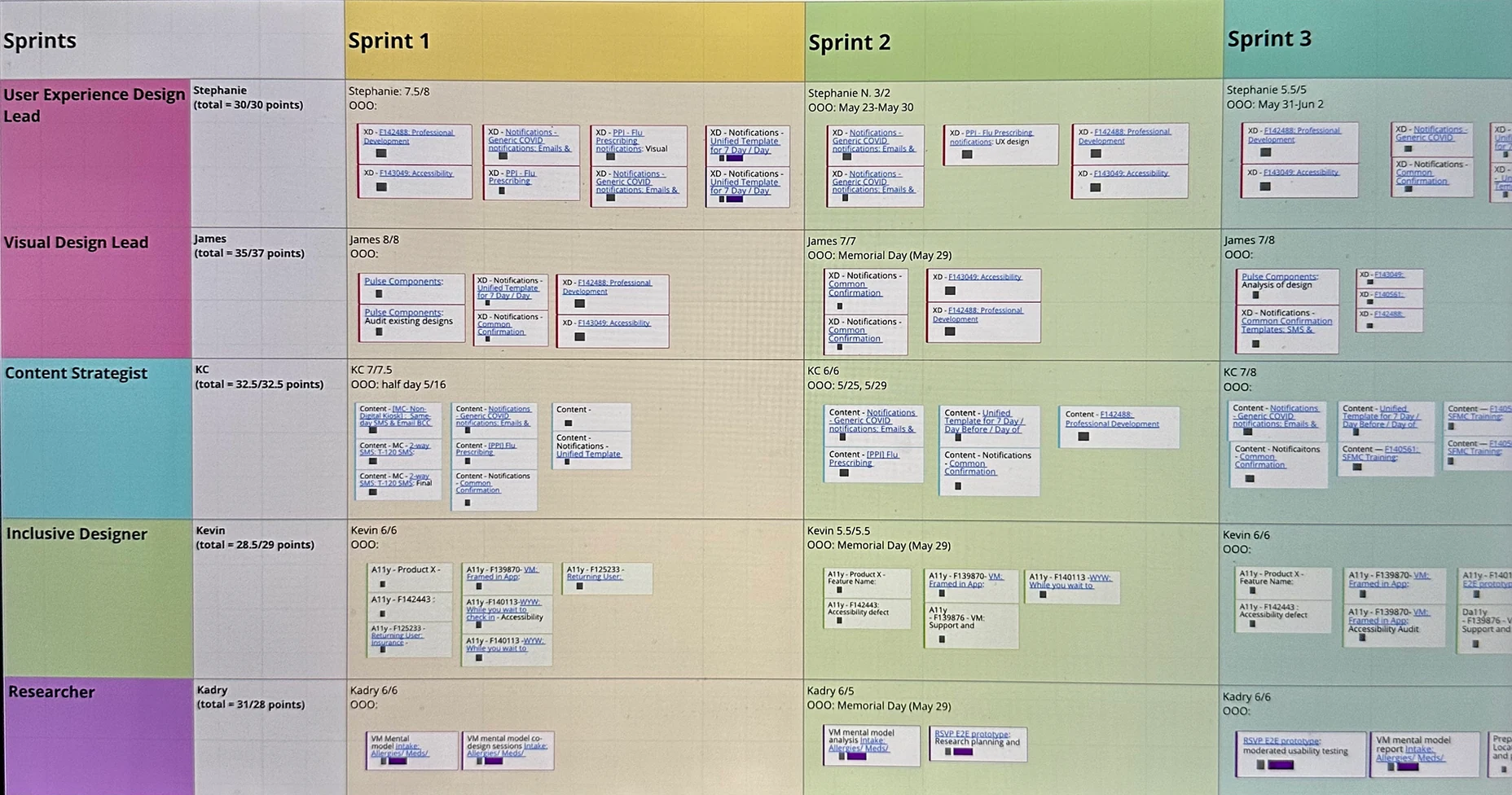
Sprint swimlanes showing each designer's workload across the quarter.
The team told me they were struggling to track which designs were latest and what needed their attention. I held a retro to surface the real issues, then worked with Steph Amaral to redesign our workspace — giving each discipline its own space with clear in-progress markers. A month later, I gathered feedback again and refined it further.
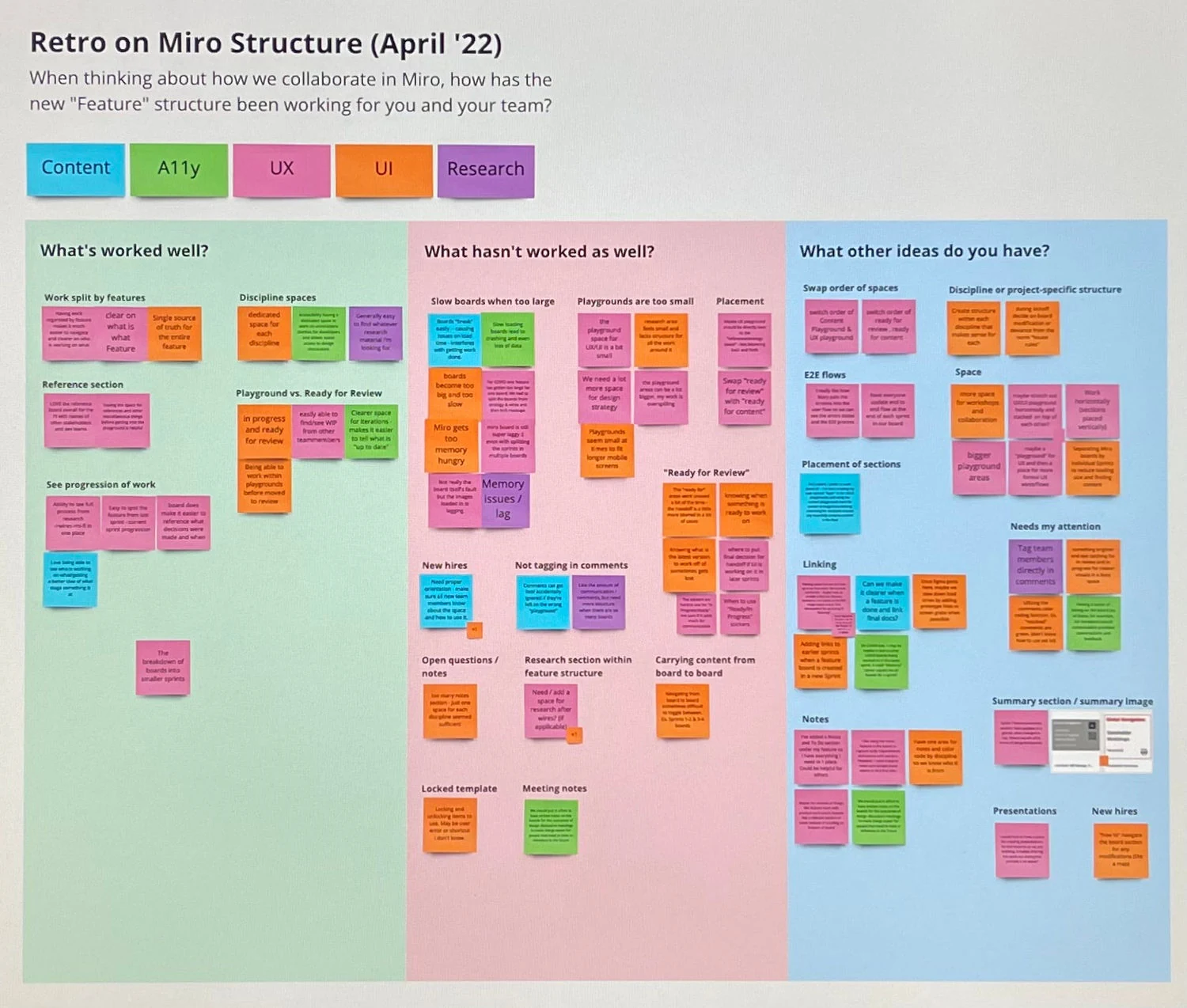
Retrospective that surfaced the real problems in our Miro workspace.
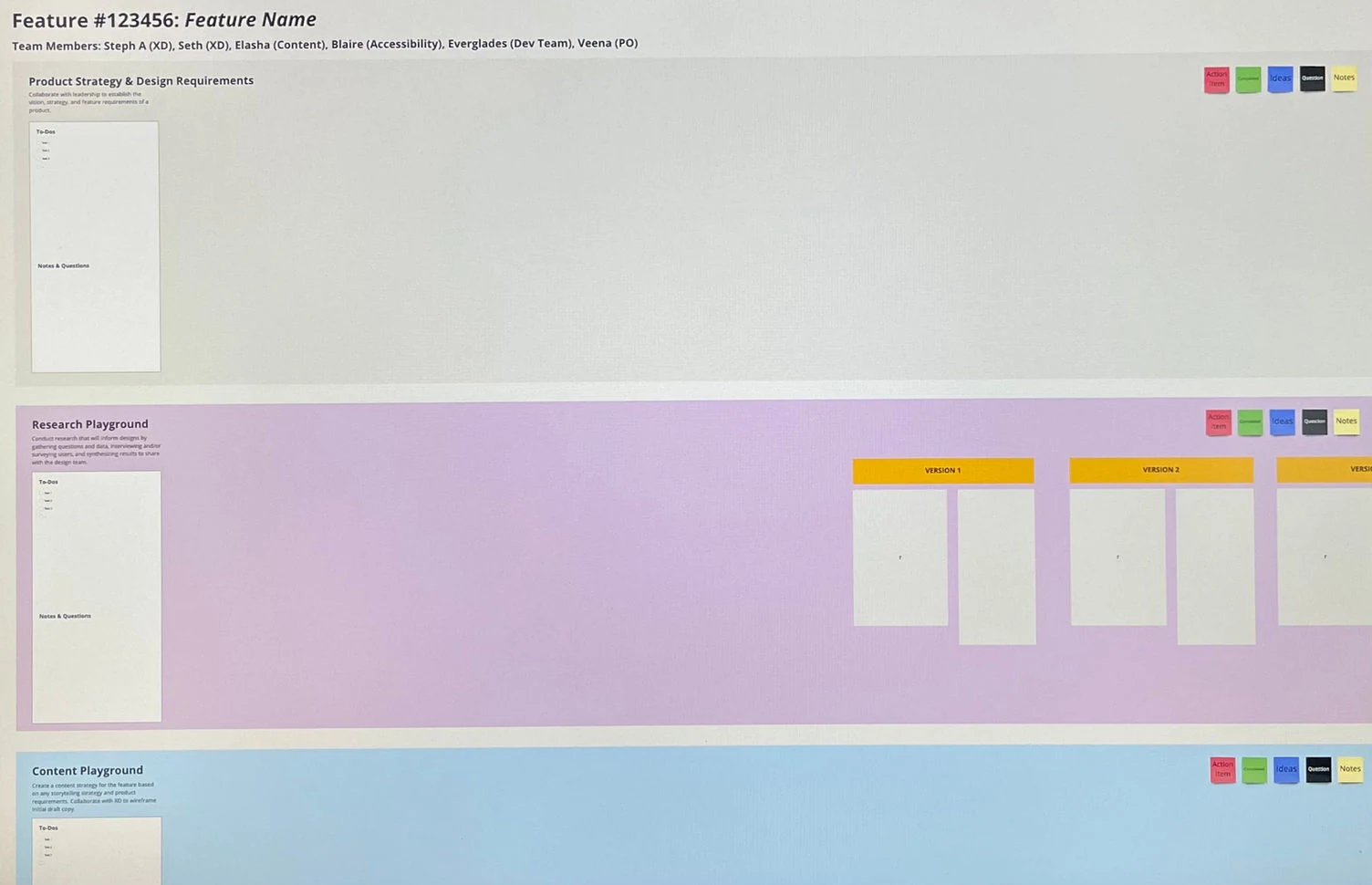
The redesigned workspace: discipline-specific spaces with clear progress states and to-do lists.
We gathered existing CVS research and online resources to understand what fears and concerns patients had around virtual care. We learned that patients were worried about the security of their health information, curious about whether insurance would cover costs, and skeptical about whether a virtual provider could really solve their health concerns. They were also genuinely excited about the time virtual care could save them. We addressed each of these concerns throughout our design process, refining our content through usability testing.
I created a high-level user flow covering how patients, including caregivers of children, would sign up for the service. The team also collaborated on a full user journey blueprint that mapped the patient, provider, back-end systems, and caregivers in one view. This gave everyone on the team a shared understanding of the experience they were designing within.
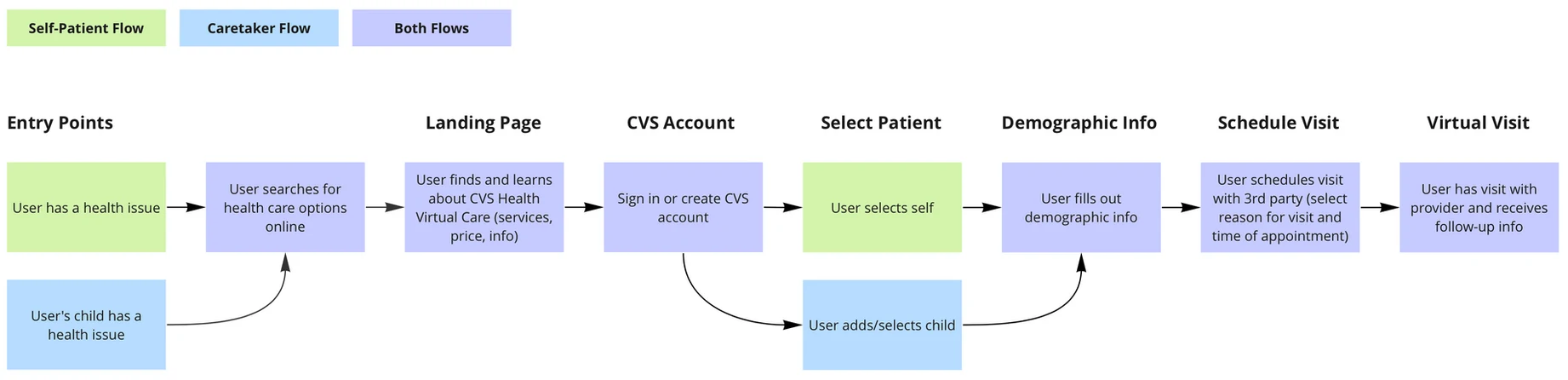
High-level user flow for the registration experience, including caregiver scenarios.
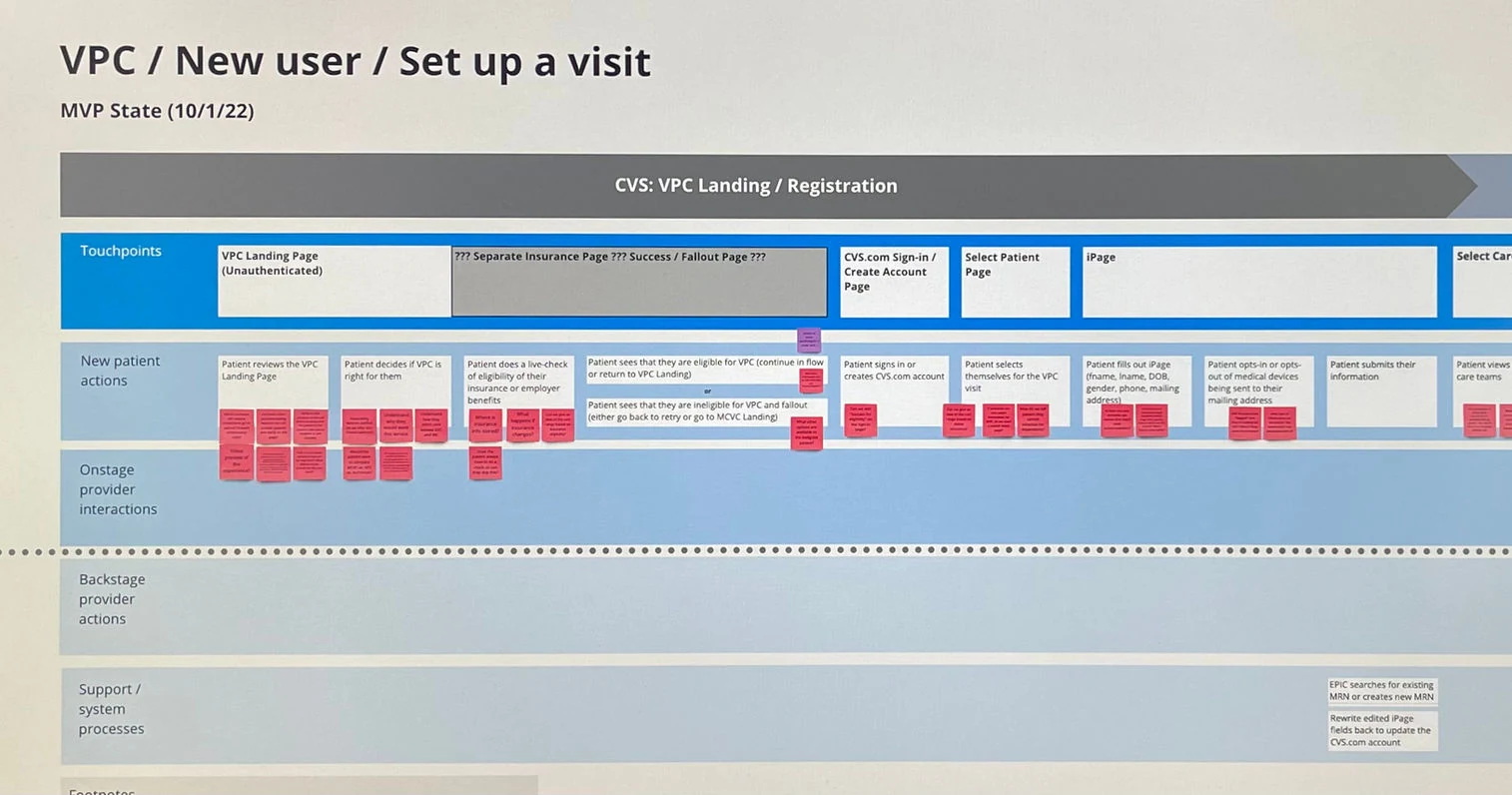
User journey blueprint — mapping the patient, provider, systems, and caregivers through the full experience.
Every week I hosted two hour-long design feedback sessions where each designer presented work in progress and received both high-level direction from me and specific feedback from teammates. When a designer was stuck on a particular problem, I set up a dedicated brainstorm session — bringing the whole team together to generate ideas around that one challenge.
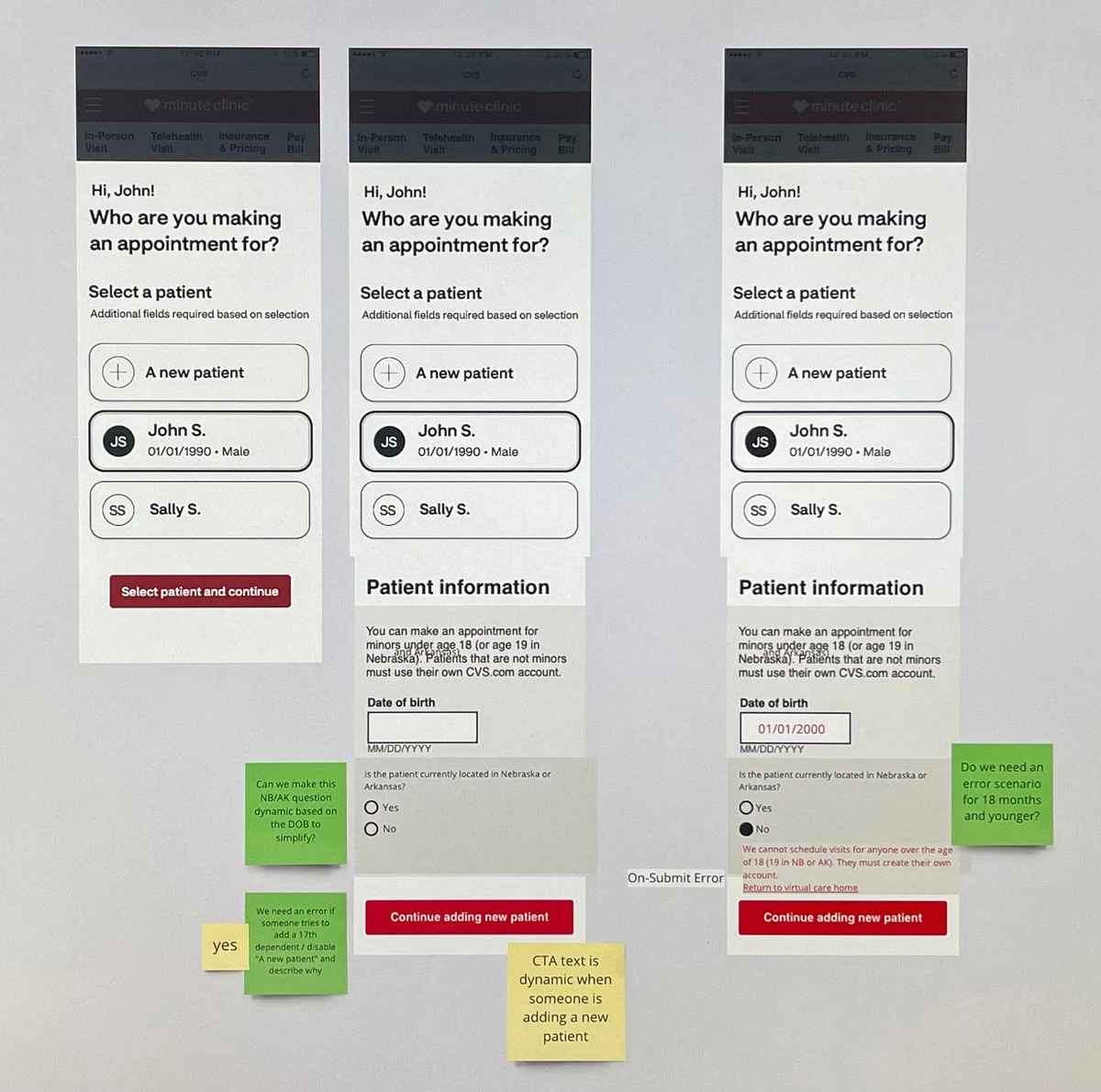
Weekly design feedback sessions — structured time for direction and peer critique.
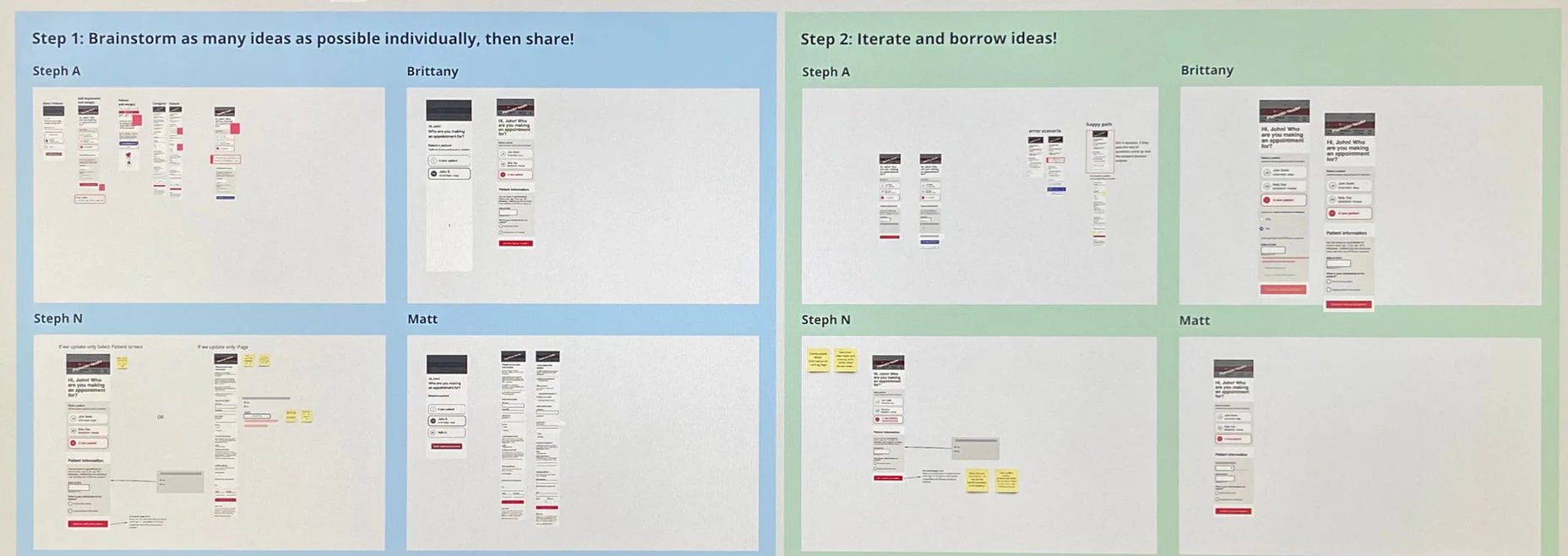
Brainstorm session for an error scenario — everyone contributing ideas, then converging on a solution together.
We tested participant understanding of each service, what they would do at each step, and what confused them, across multiple rounds throughout the year. Here's what we learned, organized by the area of the experience:
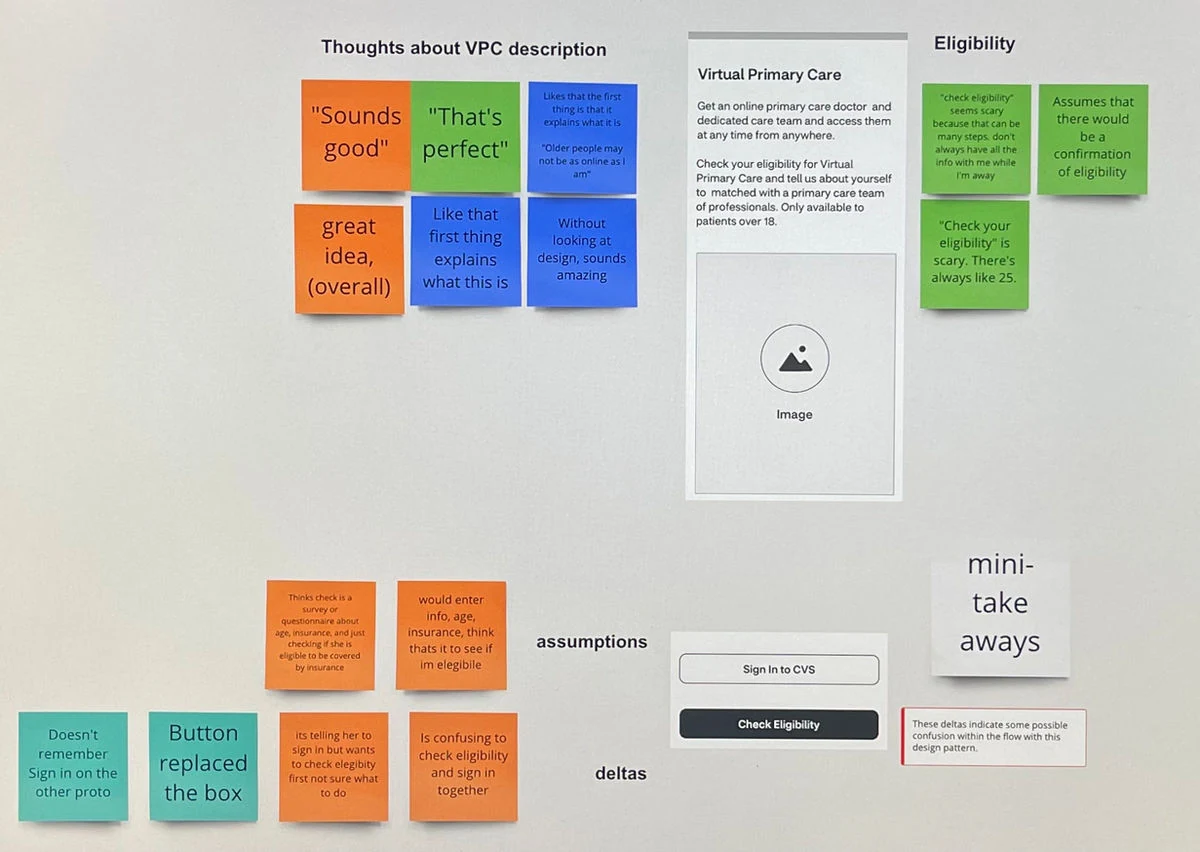
Usability testing notes board — structured to help the team synthesize feedback efficiently.
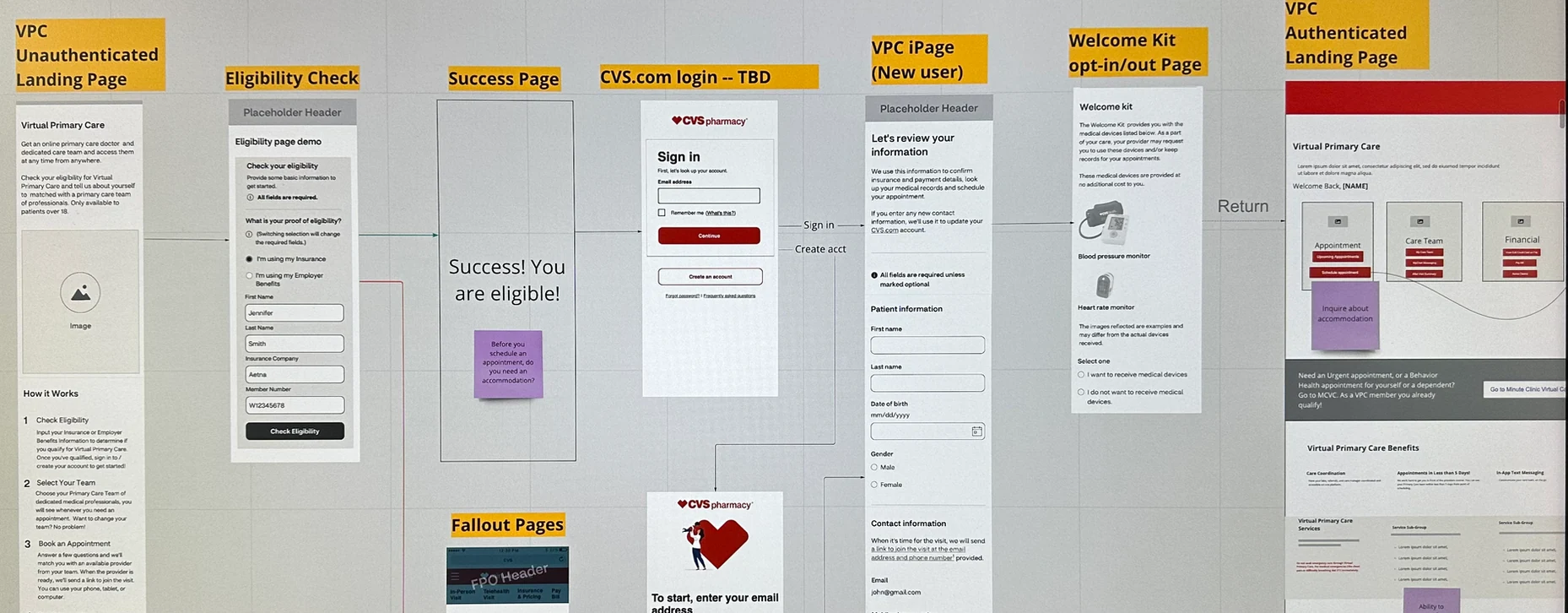
Wireframe flow — at the stage where we were ready to test the full registration experience.
For my three direct reports on the team, I held monthly sessions focused on their career goals: what parts of the design process they wanted more practice in, what communication skills they wanted to build, where they saw themselves in one year and five years. Each goal turned into tasks we wove directly into real project work throughout the year.
Each sprint, we made time to celebrate as a team. I created a Miro frame where anyone could drop anonymous kudos throughout the sprint, and near the end of each sprint we would come together to write kudos at the same time. During some of the harder weeks, this small ritual really mattered.
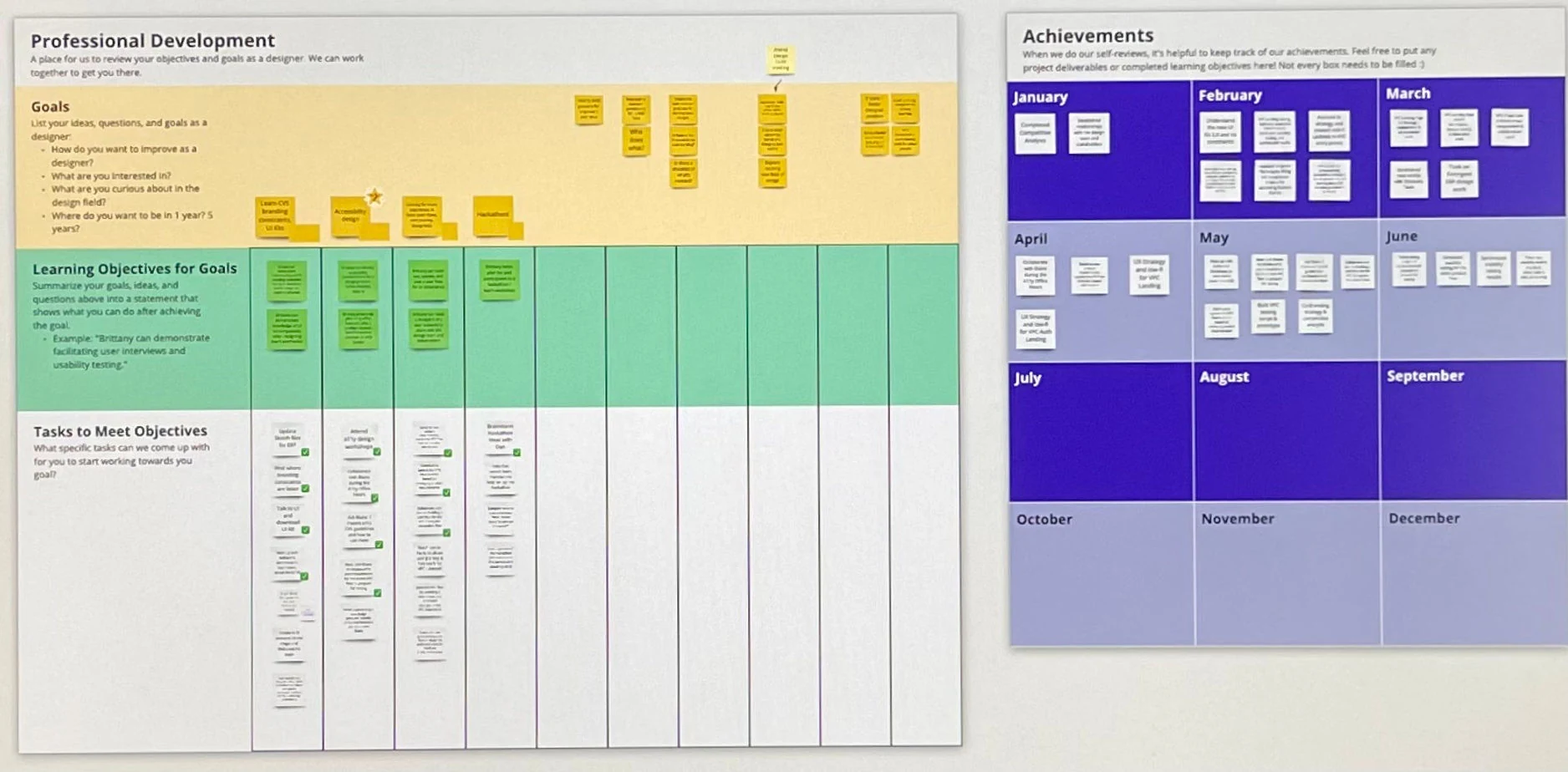
Monthly professional development sessions (intentionally blurred) — a shared space for career goals and growth.
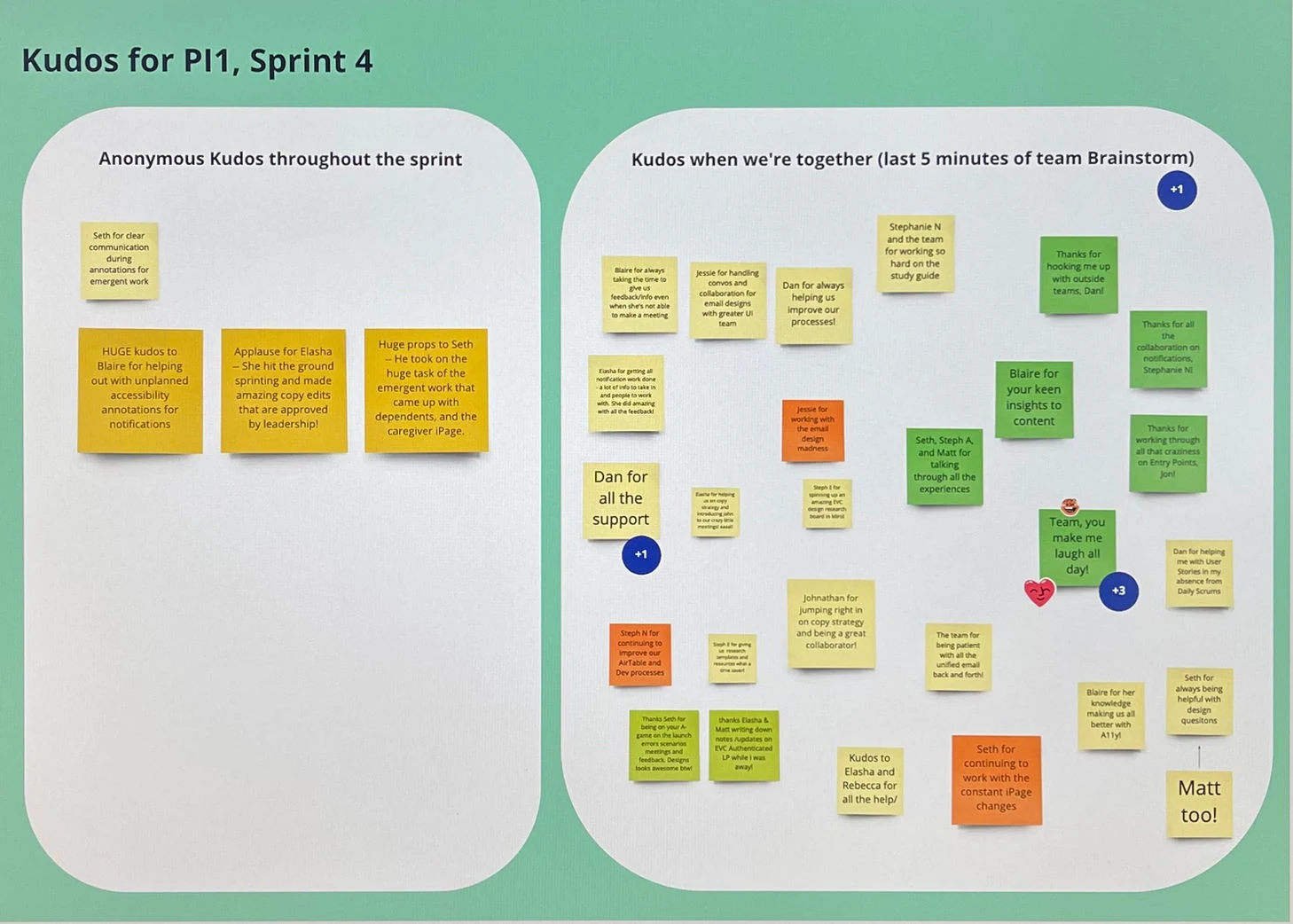
Team kudos board — a sprint ritual that kept morale strong during a demanding year-long project.
We launched CVS Health Virtual Care and CVS Health Virtual Primary Care, giving patients real options for accessing healthcare in new ways. The 95% conversion rate was a direct result of listening carefully to our users and iterating based on what they told us throughout the year. I'm proud of what this team accomplished together.
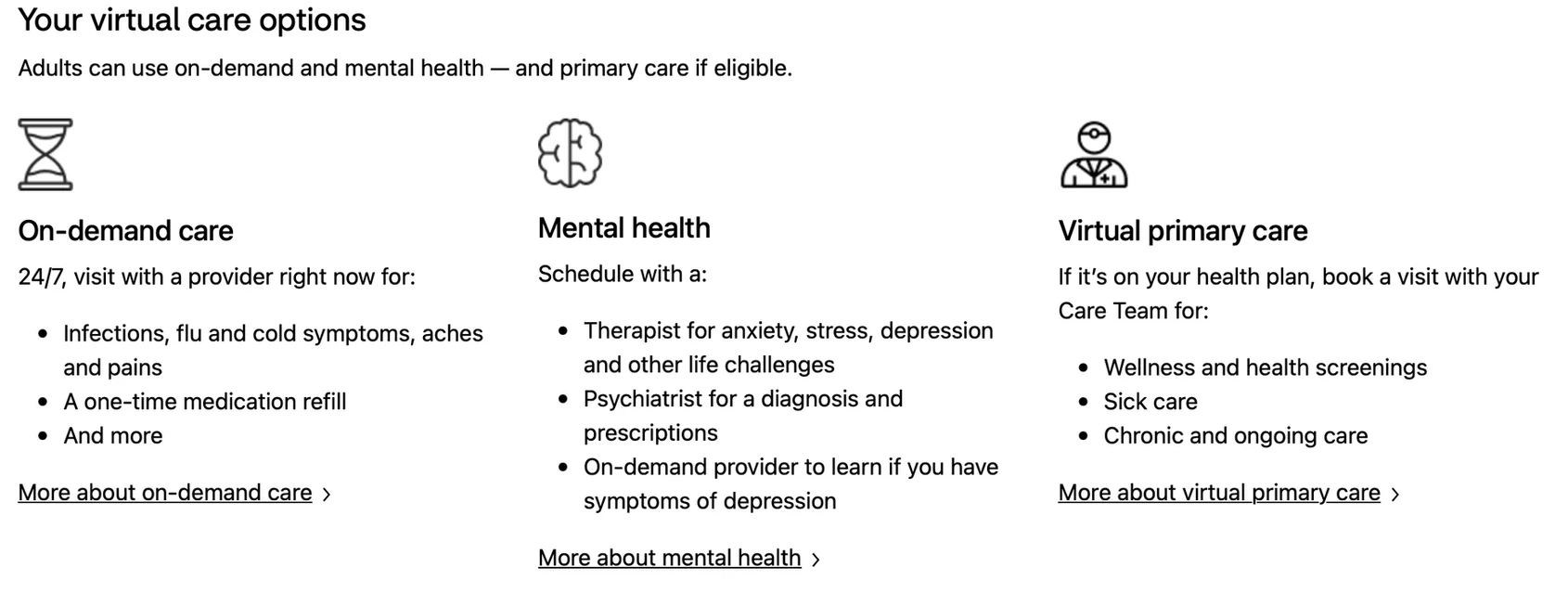
On-demand care, mental health care, and virtual primary care — three new services now available to patients.